Views: 0 Author: Site Editor Publish Time: 2026-08-16 Origin: Site
Poor fit between dust collector bags and cages remains a primary driver of premature filter failure. It frequently causes unexpected production downtime. It also leads to severe environmental compliance violations. Facility operators must recognize this critical vulnerability. You must protect your operational bottom line.
Unfortunately, many industrial facilities treat bags and cages as completely separate commodities. You might source them from different vendors. You might base this decision solely on unit price. This fragmented approach ignores a vital mechanical synergy. Both components must work together during efficient pulse-jet cleaning cycles. Without a unified system, optimal particulate capture becomes impossible.
This comprehensive guide provides maintenance teams a robust operational framework. Procurement departments will also benefit from these technical guidelines. We will explore how to evaluate and size matched filtration components. You will learn exactly how to diagnose wear patterns. You will understand how to measure existing hardware accurately. Following these principles ensures reliable, long-lasting environmental control for your facility.
Even minor dimensional deviations between bags and cages cause mechanical abrasion, blinding, and increased differential pressure.
Proper cage configuration—including wire count, ring spacing, and joint type—must align directly with the filter media's weight and flexibility.
Upgrading to specialized components (e.g., flat bone bag cages) can resolve space-constrained operational bottlenecks.
Accurate measurement of the tube sheet and existing hardware is the strongest defense against costly procurement errors.
Many plant managers view filtration hardware as simple, disposable consumables. They often miss the broader financial picture. Physical component fit directly drives key operational metrics. It impacts overall energy consumption and your regulatory compliance status. You must understand how mechanical mismatching damages your profitability.
A loose bag creates excess fabric movement during operation. During the pulse-jet cleaning cycle, compressed air shoots down into the filter. This forces the fabric outward violently. If the fit is too loose, the fabric snaps too hard. It hits the metal wires with extreme force. This repeated action causes severe mechanical fatigue. It leads to rapid flex cracking along the fibers.
Once tears develop, particulate bypass occurs almost immediately. Dirty air escapes through the exhaust stack. This triggers severe EPA and OSHA compliance risks. Facilities often face massive fines for exceeding Title V emission limits. Excess slack simply destroys your environmental safeguards.
Conversely, a tight bag chokes the entire cleaning mechanism. It physically inhibits the fabric's ability to expand properly. The bag cannot snap back to shed the accumulated dust cake. The dust cake grows thicker and heavier over time.
This blocked airflow drives up differential pressure across the system. Your main exhaust fans must work significantly harder. They draw much more electrical amperage to maintain necessary airflow. Higher amperage increases your monthly utility bills exponentially. Furthermore, the blinded media will require premature replacement. You face double penalties from energy waste and replacement labor.
A properly tensioned assembly prevents these costly scenarios. It yields maximum dust cake release during every pulse cycle. It maintains stable, predictable pressure drops across the baghouse. It maximizes the lifecycle of your expensive filtration media. You achieve lower maintenance demands and vastly improved system reliability.
Filtration components must work together flawlessly under extreme stress. We must understand how they interact during daily operation. The pulse-jet sequence applies sudden, violent pneumatic force. The hardware must absorb this force while maintaining structural integrity.
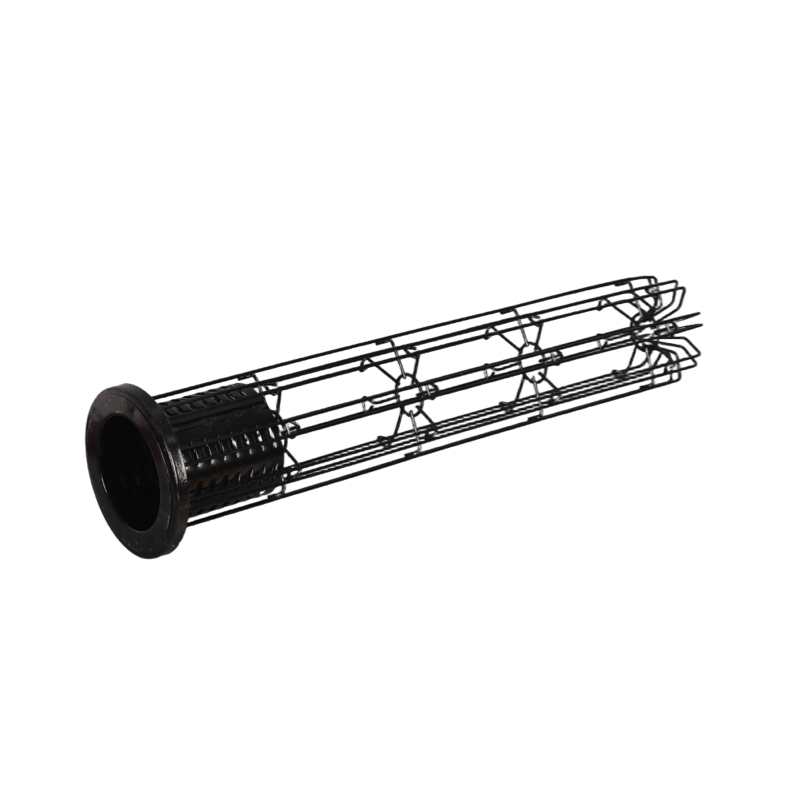
The Bag Cage functions as the essential structural backbone. It prevents the fabric from collapsing inward. The dirty air stream exerts heavy negative pressure constantly. Without a sturdy frame, the filtration system cannot operate. The frame holds the fabric taut but allows a slight, controlled expansion.
The top seal acts as the most critical junction. The snap band must seat perfectly against the metal tube sheet. Even a microscopic gap permits dirty air leaks. Accurate seating prevents abrasive dust from bypassing the filter media. A compromised seal will erode the surrounding metal over time. This erosion eventually requires a complete, expensive tube sheet replacement.
You must align the cage structure to your specific fabric. Industry standards suggest a very helpful rule of thumb. Heavier felts tolerate standard wire counts quite easily. A standard 16-ounce polyester felt is highly durable. It functions perfectly on frames featuring 10 to 12 vertical wires.
Fragile media present a much higher risk profile. Materials like fiberglass or PTFE membranes require robust support. They need higher wire counts to prevent damage. They often require 20 or more vertical wires. Extra wires prevent the fragile media from sagging deeply between gaps. They minimize abrasion points and extend service life significantly. You should always select your Dust Collector Filter Bags based on this precise structural relationship.
Industrial facilities face unique physical constraints and harsh chemical environments. You must break down standard and specialized options carefully. Selecting the wrong configuration guarantees frequent maintenance shutdowns.
Round cages represent the traditional industry baseline. You must evaluate them primarily based on material choice. Carbon steel works exceptionally well for dry, benign environments. Galvanized steel offers moderate, cost-effective rust resistance. Stainless steel becomes absolutely necessary for high moisture environments. It also resists corrosive acidic gas streams perfectly. Your choice depends heavily on your specific gas stream chemistry.
Many legacy facilities operate in extremely tight spaces. A Flat Bone Bag Cage provides an excellent engineering solution. It serves operations requiring maximum filtration area in limited headroom. However, you must consider implementation challenges carefully.
This style requires precise alignment during the installation process. Structural integrity is absolutely paramount for flat designs. Poorly built flat frames will warp under high suction forces. Once warped, they destroy the surrounding filter media rapidly. You must procure them from highly reputable manufacturers.
System performance often depends on smaller, overlooked components. You should evaluate various Filter Bag Accessories critically. These include venturis, hub bottoms, pan bottoms, and grounding wires.
Venturis accelerate the cleaning air to sonic velocity. They create a powerful shockwave down the tube length. However, evaluate when a venturi actually benefits your system. Sometimes it merely adds restrictive pressure drop without improving cleaning. Grounding wires remain essential for combustible dust applications. They prevent static charge buildup efficiently. This prevents catastrophic secondary dust explosions.
Use the chart below to guide your basic metallurgy decisions based on operating conditions.
Material Type | Primary Application | Corrosion Resistance | Cost Profile |
|---|---|---|---|
Standard Carbon Steel | Dry, ambient temperature air streams | Low | Most Economical |
Galvanized Steel | Mild moisture, standard environments | Moderate | Cost-Effective |
Epoxy Coated | High chemical exposure, specific acid/alkaline | High (Chemical) | Premium |
304 / 316 Stainless Steel | High moisture, food grade, highly corrosive | Maximum | Highest Initial Investment |
Procurement and engineering teams need a reliable, repeatable decision framework. Generic purchasing habits often lead to unexpected operational failures. Use this focused checklist when shortlisting hardware vendors for your facility.
Chemical and Thermal Compatibility
Gas streams often contain harsh, reactive chemicals. You must match materials to these exact conditions. High temperatures destroy standard protective metal coatings quickly. Acidic moisture requires specialized epoxy finishes to survive. Mismatched materials corrode rapidly and contaminate the entire system.
Dimensional Tolerances
Manufacturing variance ruins component fit instantly. A fraction of an inch causes massive operational problems. Demand strict quality control documents from your potential vendor. Reject any shipments showing inconsistent ring diameters or poor welds.
Operating Pressure
High-suction systems pull hard on vertical metal wires. The wires will bow inward under this constant stress. You must customize the horizontal ring spacing accordingly. Tighter ring spacing adds vital structural rigidity. It prevents the frame from collapsing inward and destroying the fabric.
Vendor Engineering Support
Avoid vendors acting merely as basic order takers. Seek suppliers offering true diagnostic engineering assistance. They should analyze your specific operating conditions thoroughly. A good partner helps engineer custom solutions for your plant. They solve chronic failure bottlenecks instead of just selling parts.
Assuming standard sizing based on old OEM manuals carries massive risk. Facilities modify equipment frequently over many years. Tube sheets rust and get repaired or replaced entirely. Using old manuals guarantees dangerous measurement errors. You must measure the physical hardware currently in use.
Start at the top of the collector housing. Clean the metal surface thoroughly before measuring. Measure the exact hole diameter in the tube sheet. Use precision digital calipers for maximum accuracy. Next, measure the exact thickness of the steel plate. The snap band groove must match this plate thickness perfectly.
Remove a used but largely unbroken filter. Lay it completely flat on a clean floor. Measure the lay-flat width carefully. You will use this to calculate the exact diameter. Multiply the lay-flat width by two, then divide by Pi (3.14). Next, measure the overall length. Hook your tape measure firmly under the top seal. Pull it down tightly to the bottom disc seam.
Examine the bare metal frame closely. Measure the outside diameter (OD) across the horizontal rings. Measure the total length from top to bottom accurately. Note the specific top configuration carefully. Is it a split collar, a rolled flange, or a raw top?
We strongly recommend a physical verification step. Box up your used components carefully. Send physical samples of used bags and frames to the manufacturer. An expert manufacturer will reverse-engineer the exact dimensions. They use specialized micrometers and jigs for this process. This removes all dangerous guesswork from the procurement process.
Failed components hold incredibly valuable diagnostic data. You should inspect every broken filter during changeouts. Wear patterns tell a distinct story about system health. This evaluation process constitutes strong operational risk management.
Refer to this diagnostic guide when inspecting failed materials on the plant floor.
Visible Wear Pattern | Probable Cause | Recommended Corrective Action |
|---|---|---|
Vertical Striping / Holes | Fit is too loose; fabric beats against vertical wires. | Decrease bag diameter slightly or increase wire count. |
Starburst Tears at Bottom | Bag is too long; dragging on hopper or damaged pan. | Shorten overall bag length; inspect metal bottoms for burrs. |
Rust Stains & Brittleness | Frame corrosion is chemically degrading the fabric. | Upgrade metallurgy to stainless steel or epoxy coating. |
Top Cuff Abrasion | Improper seating at the tube sheet; air leaking past seal. | Verify tube sheet hole diameter; check snap band sizing. |
Vertical wear lines indicate the fabric fits too loosely. The material beats against the vertical wires during every pulse. You need a tighter fit or a higher wire count frame. Look at the bottom of the filter next. Starburst tears indicate a severe length issue. The fabric drags constantly against the abrasive hopper walls. Alternatively, check your metal pan bottoms for sharp damage. Orange stains indicate severe chemical attack. The frame is rusting and degrading the fabric chemically. Upgrade to stainless steel or an epoxy coating immediately.
System performance relies heavily on proper component synergy. A dust collector functions properly only when parts fit perfectly. You cannot treat these filtration components as generic commodities.
When selecting your next set of replacement parts, use strict shortlisting logic. Prioritize suppliers who mandate exact tube sheet measurements. Seek partners who analyze your specific operational data. Avoid vendors selling generic off-the-shelf sizes without proper verification.
Download a comprehensive measurement worksheet before requesting preliminary quotes.
Request a specialized media audit from an experienced application engineer.
Contact a reputable supplier to diagnose chronic wear patterns immediately.
Secure a custom quote based strictly on precise dimensional tolerances.
A: It is not always required. However, we highly recommend replacement if cages show rust, bent wires, or broken welds. Compromised cages will immediately destroy your new filter media. Inspect them carefully during every single changeout cycle.
A: Typically, there should be a very slight pinch. We measure this in tight fractions of an inch. This specific clearance allows for media expansion during pulsing. It prevents excessive slack while maintaining vital structural support.
A: Rapid blinding often results from an incorrect fit. If the fit is too tight, it prevents proper cake release. Blinding also stems from incorrect media selection. Insufficient pulse-jet pressure will also leave dust trapped in the fabric.
A: A flat bone design maximizes filtration surface area significantly. It fits this larger area within a smaller physical footprint. This makes it ideal for older, low-clearance baghouses. However, it requires highly precise installation alignment to prevent warping.