Views: 0 Author: Site Editor Publish Time: 2026-08-11 Origin: Site
Choosing the right industrial air filtration system can feel overwhelming for many operators. Facility managers constantly face strict compliance demands and tough operational hurdles. Choosing between a baghouse and a cartridge collector directly impacts facility downtime, maintenance labor, and OSHA/EPA compliance. There is no universal "best" option for every manufacturing scenario. The right choice is dictated entirely by your facility footprint, dust particulate size, and specific dust characteristics. We will provide a vendor-neutral, engineering-focused evaluation framework. You will learn how to match filtration technology to your specific application seamlessly. This guide helps you maximize extraction efficiency and maintain critical clean air standards across your entire plant.
Dust Collector Filter Bags excel in handling heavy dust loads, fibrous materials (like woodchips), and high-temperature environments.
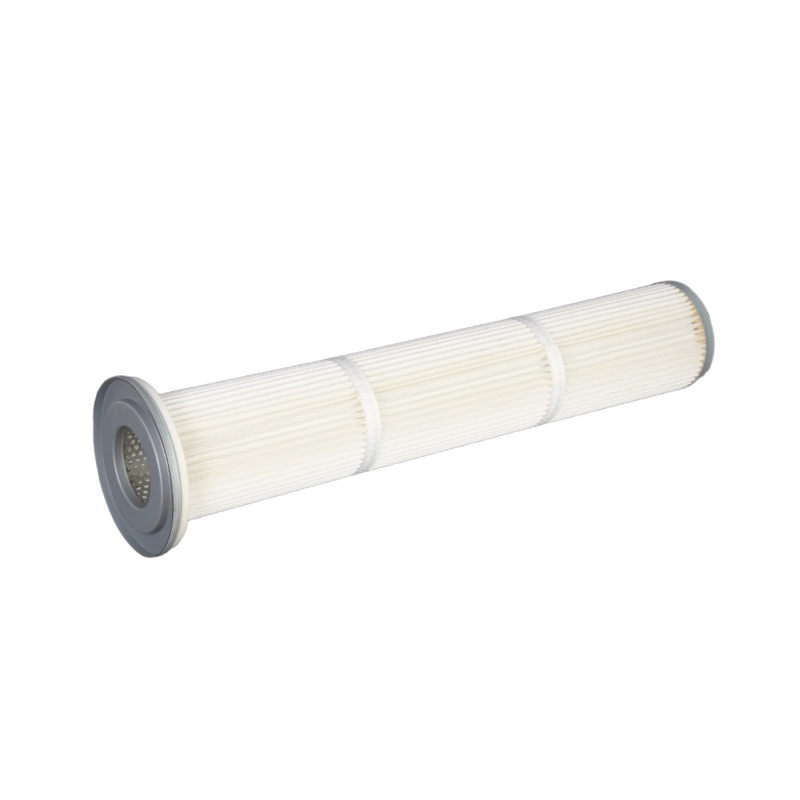
A dust collector filter cartridge provides vastly superior filtration efficiency for fine, toxic, or free-flowing dust while requiring up to 50% less floor space.
Filter blinding (clogging) is the primary risk when misapplying a cartridge system to sticky or moisture-heavy applications.
Total Cost of Ownership (TCO) must factor in replacement frequency, energy consumption (pressure drop), and change-out labor, not just media costs.
Engineers design industrial filtration systems based on specific physical principles. The primary difference between these two technologies lies in how they capture airborne particles. You must understand these core mechanics to make an informed equipment decision.
The air-to-cloth ratio measures how much dirty air passes through one square foot of filter media per minute. Cartridges pack hundreds of square feet of media into a very small volume. Manufacturers achieve this high density via tight pleating techniques. Bags rely on sheer length and depth to provide adequate surface area. Traditional baghouses require massive steel enclosures to house hundreds of long tubular fabrics. This fundamental design difference dictates how each system performs under heavy particulate loads.
Different media types capture dust in distinct ways. They behave differently under continuous operation. You must align these mechanics with your facility needs.
Cartridges: These act as surface-loading filters. Dust builds on the outside of the pleats rapidly. A pulse of compressed air easily knocks this dust off into a hopper. The media itself remains largely clear of deep particulate penetration.
Bags: These are primarily depth-loading filters. Dust penetrates the fabric matrix initially during startup. This penetration creates a primary "dust cake" on the material. This dust cake actually performs the high-efficiency filtering. The fabric simply acts as a robust substrate to hold the cake in place.
Many modern manufacturing plants face severe floor space limitations. Ceiling height often restricts the installation of tall baghouses. Traditional Dust Collector Filter Bags typically require extensive vertical clearance for housing and removal. Facilities lacking vertical or floor space are functionally forced to evaluate cartridges. Cartridge units provide highly flexible, horizontal configurations. They deliver immense filtration capacity in a highly compact footprint. This space-saving design makes them extremely popular for indoor installations.
Your specific dust type should drive your entire selection process. Applying the wrong filter type guarantees catastrophic system failure. We must analyze dust properties carefully before making equipment recommendations.
Certain applications demand highly efficient surface filtration. You should choose a cartridge collector when dealing with fine, dry, free-flowing dust.
Ideal applications include welding fume extraction, plasma cutting, pharmaceutical powders, and fine silica dust.
They excel when you need high MERV ratings for recirculating indoor air.
They capture sub-micron particulates effectively.
A high-quality dust collector filter cartridge handles these demanding environments perfectly. The surface-loading nature prevents microscopic particles from embedding permanently into the core media.
Cartridges struggle in many heavy industrial scenarios. You should deploy traditional bags for challenging particulate matter.
They are ideal for large, abrasive, or fibrous particulates. Sawdust, grain, and heavy metal grinding require durable fabric.
They dominate in high-moisture processing environments.
They handle sticky or hygroscopic dust effortlessly.
Moisture and sticky resins easily bridge the narrow pleats of a cartridge. This bridging ruins the filter permanently.
Installing the wrong media leads to severe operational failures. Suppose you use a cartridge for fibrous wood dust without installing a pre-cyclone. The fibrous material will pack tightly between the narrow pleats. Standard pulse-jet cleaning cannot dislodge this densely packed material. This causes rapid filter blinding. The system pressure drop spikes dramatically within days. The system eventually shuts down to protect the extraction fan. You face unplanned downtime and highly expensive replacements.
Application Suitability Comparison
Application Feature | Cartridge System | Baghouse System |
|---|---|---|
Particulate Size | Sub-micron to fine | Medium to very large |
Moisture Tolerance | Very low (prones to bridging) | High (accommodates dampness) |
Dust Load Volume | Light to moderate | Heavy to extreme |
Abrasive Dusts | Poor (can tear pleats) | Excellent (durable fabric) |
Material science dictates how well your collector performs over time. You have numerous choices regarding fabric treatments and synthetic membranes. Selecting the correct substrate ensures long-term regulatory compliance.
Every application requires a specifically matched fabric blend. Standard environments differ greatly from aggressive chemical processing plants.
We highly recommend Polyester Filter Bags for standard operations. They serve as a cost-effective workhorse for dry, ambient-temperature applications. They offer excellent dimensional stability and good resistance to most common industrial dust types.
However, harsh environments demand advanced synthetic materials. You should specify PTFE Filter Bags for extreme conditions. They provide exceptional chemical resistance. They withstand very high heat levels safely. Their slick surface ensures excellent sticky dust release during cleaning cycles. This makes them invaluable in cement plants and high-temperature metallurgical processing.
Environmental regulations continually force facilities to capture increasingly smaller particles. Standard cellulose cartridges cannot meet modern toxic dust standards.
You must introduce a Pleated PTFE Filter Cartridge to achieve HEPA-level efficiency safely. These advanced filters feature an ultra-thin ePTFE membrane laminated directly to the base substrate. This membrane physically prevents microscopic dust penetration into the core material. It acts like an impenetrable microscopic screen. This upgrade ensures full compliance in highly regulated environments. It helps facilities meet strict NFPA standards for combustible dust mitigation effectively.
Maintenance departments spend significant time servicing filtration equipment. System design dictates how easily technicians can perform routine replacements. We must evaluate these operational realities carefully before finalizing any system layout.
Filter replacement ranks among the most dreaded industrial maintenance tasks. The two systems offer completely different operational experiences.
Cartridges generally offer much faster, cleaner replacement times. Technicians perform tool-less change-outs from the outside of the collector. This exterior access reduces hazardous confined space entry risks significantly. You can swap an entire cartridge bank in just a few hours.
Replacing cages and bags remains highly labor-intensive. Technicians often require full internal access to the dirty air plenum. They must wrestle with heavy metal cages and long, dirty fabric tubes manually. This strenuous process leads to significantly longer facility downtime.
Collectors utilize automatic cleaning cycles to maintain steady airflow continuously. They use distinct methods to dislodge the accumulated dust cake.
Modern pleated cartridges rely entirely on pulse-jet cleaning. A sharp blast of compressed air expands the media outward briefly. This shockwave breaks the dust free effortlessly.
Older baghouses often feature reverse-air or shaker mechanisms. Shakers physically vibrate the bags to loosen the dirt. Pulse-jet technology is far more efficient than these mechanical shaking methods.
Ruggedness matters immensely in fast-paced industrial settings. Mishandling during shipping or rough installation causes immediate problems.
Cartridges are highly sensitive precision components. They are easily damaged during transport. A dented outer liner or torn pleat ruins the filter completely.
Bags are incredibly rugged. You can drop them or fold them without causing any functional damage. However, they remain prone to mechanical wear from internal cages over years of operation. The fabric eventually rubs thin against the bare metal wire.
Facility managers need a highly structured approach to equipment selection. You should follow a clear, objective framework always. This prevents emotional or strictly trend-based purchasing decisions.
Use this four-step decision matrix to finalize your air filtration strategy.
Analyze dust type and size: If your dust is fibrous, sticky, or wet, you must select bags. If your dust is fine, dry, and free-flowing, you should specify cartridges.
Check physical footprint limitations: Measure your available floor space and maximum ceiling height accurately. Cartridges win easily in tight indoor spaces.
Determine necessary filtration efficiency: Check your local environmental regulations thoroughly. Note your required MERV or HEPA targets. Toxic materials require membrane-laminated media.
Model maintenance labor: Project the downtime required for full change-outs over a five-year period. Factor in confined space permitting requirements carefully.
This systematic approach ensures highly reliable long-term performance. You match the physics of the collector directly to the reality of your factory floor.
Specifying industrial air filtration requires matching applied physics directly to your facility application. It is never simply a matter of choosing a "modern" technology over an "older" one. Both styles serve crucial, distinct roles in modern manufacturing.
Your facility deserves reliable dust extraction and minimal operational downtime. You must base your final purchasing decision on actual particulate testing.
We strongly recommend conducting a professional dust hazard analysis (DHA) soon. You should perform comprehensive dust testing before finalizing any heavy capital purchase. Protect your workforce by making a smart, engineering-driven choice today.
A: Yes, you can often retrofit an existing baghouse. Manufacturers offer "pleated bags" designed to fit standard baghouse tube sheets. These hybrid filters increase your active surface area significantly without replacing the entire steel housing. They work excellently for dry dusts but still struggle with high-moisture applications.
A: Functionally, they operate on the same scientific principles. "Canister" is a term used frequently in smaller woodworking or hobbyist circles. Industrial facilities exclusively use the term "cartridge." Both utilize pleated media to maximize surface area within a compact, cylindrical shape.
A: Replacement frequency depends heavily on your operating hours and pressure drop readings. Generally, cartridges require replacement every one to two years. Traditional bags often last two to three years due to their rugged depth-loading nature. You should always monitor your differential pressure gauge to determine the exact replacement timeline.