Views: 0 Author: Site Editor Publish Time: 2026-08-18 Origin: Site
Unplanned downtime creates massive headaches in modern industrial dust collection systems. Environmental non-compliance frequently triggers severe EPA and OSHA violations. These primary risks threaten heavy industrial facilities and their daily output. Suboptimal filter selection directly impacts your plant efficiency. Poor choices cause premature wear. They force excessive fan energy use and trigger unexpected production halts. You simply cannot afford these continuous disruptions.
This guide strips away confusing marketing noise. We detail the strict mechanical realities of the reverse air bag filter. We provide a highly practical, evidence-based framework here. You will learn how to evaluate specific industrial loads accurately. You will also discover how to select the exact filtration media required. Finally, we explore the specific hardware you need to ensure long-term environmental compliance.
Reverse air bag filters utilize a gentle, low-pressure cleaning mechanism ideal for high-temperature, delicate, or easily agglomerated dust (e.g., fiberglass, cement).
Selecting Dust Collector Filter Bags requires balancing chemical composition, temperature thresholds, and air-to-cloth ratios rather than defaulting to the lowest initial cost.
Standard Polyester Filter Bags offer excellent durability for general ambient applications but fail rapidly under high-moisture/high-heat (hydrolysis) conditions.
Proper tensioning hardware and Filter Bag Accessories are non-negotiable for preventing mechanical flex-fatigue and extending bag life.
A reverse air bag filter functions as a highly specialized, compartmentalized baghouse system. It uses clean, low-pressure air. The system introduces this air in the reverse direction of the normal gas flow. This action gently collapses the bags. The collapse dislodges accumulated dust cakes effectively. Industry professionals rely on this gentle cleaning mechanism. It protects delicate filter fibers from aggressive shockwaves.
Understanding the mechanical operation requires breaking down the exact cleaning cycle. The system operates through a precise sequence. It isolates sections to maintain continuous plant operation.
Filtration Phase: Dirty gas enters the baghouse. It usually enters from the bottom hopper section. Dust collects on the inside of the woven or felted bags. Clean air passes through the fabric and exits the system.
Isolation: The system isolates one compartment at a time. It uses heavy-duty dampers for this step. These dampers cut off the dirty gas flow completely. This step ensures zero interference during cleaning.
Cleaning Phase: A secondary fan activates. It introduces reverse air into the isolated compartment. The bag gently collapses inward. Anti-collapse rings prevent the fabric from flattening entirely. The dust cake breaks apart. It falls directly into the hopper below.
Re-inflation: The system brings the compartment back online gradually. Dampers open slowly. This slow re-inflation prevents violent bag-popping. Sudden mechanical stress destroys filter media quickly.
You must recognize the operational reality of these systems. They differ vastly from pulse-jet units. Reverse air systems always clean off-line. They require larger physical footprints. They operate at much lower air-to-cloth ratios. However, they exert significantly less mechanical stress on the fabric. They avoid the aggressive, high-pressure shocks seen in pulse-jet systems. This gentle approach dramatically extends media life.
Industrial facility managers must establish strict business success criteria. You should frame your selection process around extending service life. You must maintain stable differential pressure across the system. You also need to ensure total compliance with strict emission limits. Selecting Dust Collector Filter Bags demands careful engineering analysis. You cannot simply default to legacy specifications.
You must evaluate your gas stream across four core dimensions. Ignoring any single dimension guarantees premature failure. We outline these critical factors below.
Filter Media Evaluation Matrix
Evaluation Dimension | Key Considerations | Failure Risks |
|---|---|---|
Operating Temperature | Standard ambient vs. extreme heat (500°F+). Note continuous limits vs. surge limits. | Thermal degradation, fabric shrinkage, and immediate catastrophic failure. |
Chemical Environment | Assess gas stream for specific acids, alkalis, and oxygen levels. | Chemical attack, embrittlement, and rapid tensile strength loss. |
Moisture Risk | Evaluate the dew point accurately during startup and shutdown phases. | Hydrolysis degradation, mud cake formation, and irreversible blinding. |
Dust Characteristics | Analyze abrasiveness, combustibility, and stickiness (agglomeration potential). | Pinhole leaks, excessive abrasion, and poor cake release. |
Operating temperature constraints dictate your baseline material choice. You must distinguish between continuous operating temperatures and occasional surge temperatures. A brief temperature spike can destroy standard media instantly. Extreme environments require specialized materials like PTFE or woven fiberglass.
Chemical environments dictate the survivability of the fibers. You must assess the gas stream for acids and alkalis. Oxygen levels also play a crucial role. High oxygen content accelerates oxidation in specific polymers. You need a complete gas chemistry profile before making decisions.
Moisture and hydrolysis risks ruin more filters than any other factor. You must evaluate the dew point continuously. High-moisture environments present extreme dangers. Choosing the wrong material leads to catastrophic bag blinding. It also causes severe chemical degradation. Condensation turns dry dust into a solid, un-cleanable mud cake.
Dust characteristics determine your media finish requirements. You must understand the abrasiveness of your particulate matter. Highly abrasive dust shreds weak fabrics. Combustible dust requires anti-static media treatments. Sticky dust demands specialized surface coatings for proper cake release.
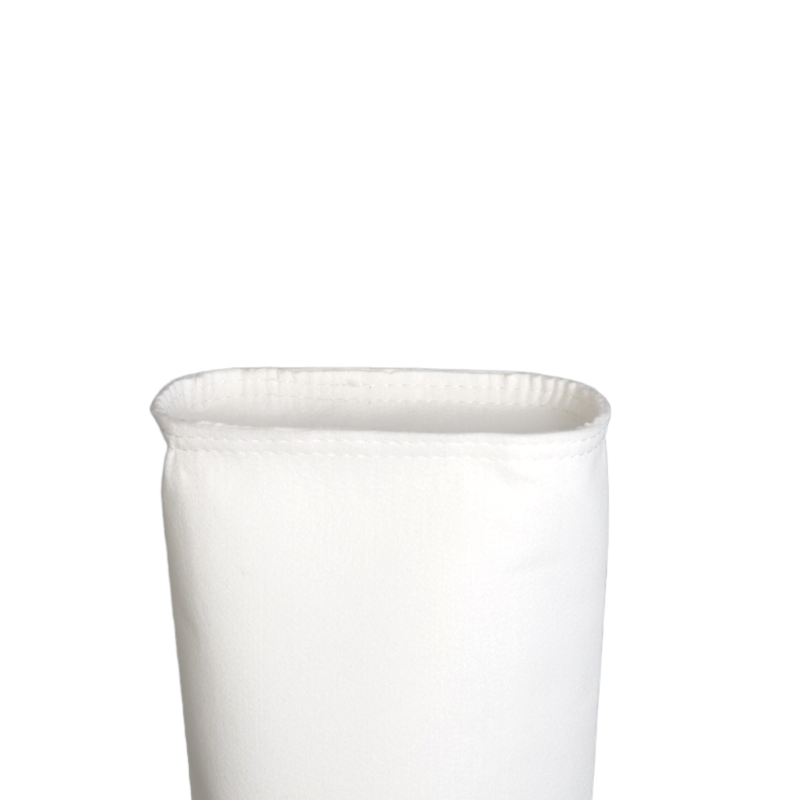
Industry professionals widely regard polyester as the ultimate workhorse media. It dominates the general manufacturing sector. It offers an optimal balance of critical physical properties. You get high tensile strength. You also receive excellent abrasion resistance. Furthermore, it delivers exceptional cost-effectiveness. Polyester Filter Bags provide reliable performance across diverse ambient scenarios.
You must understand its exact performance specifications. Engineers rely on these limits for safe operation.
Maximum continuous operating temperature sits at roughly 275°F (135°C).
Surge temperatures can briefly reach 300°F (150°C) without immediate failure.
The material shows good resistance to most standard, non-aggressive chemicals.
It exhibits poor resistance to heavy acids and concentrated alkalis.
We see countless successful Polyester Filter Bag Applications in the real world. Woodworking facilities rely on them heavily. Cement milling operations use them during ambient crushing stages. Metalworking shops deploy them for grinding dust extraction. They also excel in general bulk powder handling operations. They handle dry, abrasive dust exceptionally well.
We must provide a vital transparency check here. Every material possesses strict limitations. You must explicitly avoid using standard polyester in specific hostile environments. Do not use it in environments combining high moisture with heat. Boiler exhaust streams represent a perfect example. Polyester remains highly susceptible to hydrolysis under these conditions. The moisture physically breaks down the polymer chains. The bags will literally fall apart within weeks. You must upgrade your media if you face these exact conditions.
Raw filtration media rarely suffices for complex industrial operations. Modern manufacturing processes generate highly challenging particulate matter. Raw felt or woven fabrics trap too much dust internally. This internal trapping raises differential pressure rapidly. You need specialized engineering solutions. Advanced treatments transform basic media into high-performance barriers.
Engineers deploy several advanced solution approaches today. You should consider these upgrades for difficult applications.
Singed or glazed finishes offer an immediate performance boost. Manufacturers apply heat to the media surface. This heat melts loose surface fibers down. The process creates a smooth, uniform barrier. It dramatically improves dust cake release during the reverse air cycle. It also significantly reduces differential pressure across the system.
PTFE membrane (Teflon) lamination represents the gold standard for emission control. Manufacturers bond a micro-porous PTFE film to the substrate. This membrane creates a true surface-filtration barrier. Dust never penetrates the underlying fabric. It is ideal for ultra-fine particulate matter like PM2.5. It also handles highly sticky dust effortlessly. It lowers stack emissions to near-zero levels.
Oleophobic and hydrophobic treatments protect against fluid contamination. Manufacturers immerse the media in a chemical bath. They then cure it in an oven. The resulting fabric repels oils effectively. It also repels liquid moisture. These treatments prove absolutely essential in moist environments. They prevent premature blinding and extend media lifespan significantly.
You must respect a fundamental rule of system integrity. The highest-grade bag will fail rapidly if installed with sub-standard hardware. Reverse air systems collect dust on the inside of the media. This internal collection method requires very specific structural support. The fabric undergoes unique stresses during the collapse cycle. You cannot cut corners on the installation hardware.
You must evaluate and procure crucial Filter Bag Accessories carefully. Each component plays a vital role in preventing mechanical failure.
Anti-collapse rings act as the primary structural backbone. Manufacturers sew these rigid rings directly into the bags at specified intervals. They prevent the fabric from pancaking completely during the reverse air cleaning cycle. Without these rings, the bag closes tight. The reverse air cannot flow through the tube. The dust cake remains trapped inside.
Tensioning assemblies require precise calibration. Installers use J-bolts and heavy-duty springs for this task. They keep the bags perfectly taut. Over-tensioning causes immediate tearing at the seams. Under-tensioning causes excessive fabric flexing. A loose bag snaps back and forth violently. This movement causes severe bottom-cuff abrasion against the metal tube sheet. Springs help absorb the shock of re-inflation.
Clamps and cuff designs ensure strict environmental compliance. You must maintain a perfect, leak-proof seal at the tube sheet. Even tiny pinhole leaks allow dust bypass. We recommend using stainless steel worm-gear clamps. Snap-bands also provide an excellent friction fit. Custom beaded cuffs offer robust sealing options. Your choice depends entirely on your specific tube sheet design.
Industrial operators repeat the same avoidable mistakes frequently. You must study these common failure modes. Proactive knowledge prevents catastrophic system shutdowns. Flex fatigue ruins thousands of bags annually. It is almost always caused by improper tensioning during installation. Crews rush the job. They leave the assemblies too loose. The bags act like sails in a windstorm, destroying themselves through sheer mechanical friction.
Hopper bridging represents another severe operational risk. Facilities often fail to evacuate the hopper fast enough. The dust piles up high. The incoming gas stream catches this accumulated dust. It re-entrains the particulate back up into the bags. This creates a vicious cycle. It severely abrades the bottom section of the filters. You must keep your hoppers completely empty during operation.
Dew point excursions cause irreversible damage. Operators start up or shut down the system too slowly. The gas stream temperature drops below the dew point. Condensation forms instantly on the fabric walls. This moisture mixes with the dust. It turns the particulate into an un-cleanable mud cake. You must bypass the baghouse during cold startups. You must also purge the system with hot air before shutdown.
We advise implementing strict shortlisting logic before procurement. Procurement and engineering teams must work together. You need to audit your current differential pressure logs thoroughly. You must perform a fresh gas stream chemical analysis. You also need to review your exact failure history. Do this before ordering any replacement parts.
We urge you to consult with a dedicated filtration engineer today. Request a comprehensive media-compatibility analysis. Consider performing laboratory dust-testing on your specific particulate matter. Do not blindly reorder the legacy OEM specifications. Operations change over time. Your gas stream today likely differs from your gas stream five years ago.
Optimizing a reverse air bag filter system remains an intense exercise in material science. It also demands absolute mechanical precision. You cannot treat these massive industrial systems as generic commodities. Every single component must work in perfect harmony. The media must survive the chemical environment. The tensioning assemblies must support the fabric correctly.
Aligning your chosen filters and hardware with your exact process realities provides immense value. This precise alignment is the only verifiable way to maximize your operational efficiency. It protects your equipment from aggressive wear. Most importantly, it ensures your facility maintains strict, long-term environmental compliance. Take the time to engineer your filtration solutions correctly.
A: Typically between 1.5:1 to 2.5:1. This ratio is much lower than pulse-jet systems. It ensures gentle filtration and longer bag life.
A: Advise an initial check shortly after installation. You must wait until bags have "broken in" and stretched. Following this, schedule semi-annual preventative maintenance checks.
A: You can only do this if the continuous operating temperature remains strictly below 275°F. The environment must also have negligible moisture and chemical risks. Otherwise, the cost of premature failure will eclipse upfront savings.
A: Moisture condensation typically drives this issue. Leaking dampers also cause problems. They fail to isolate the compartment properly. Insufficient reverse-air pressure during the cleaning cycle is another major culprit.