Views: 0 Author: Site Editor Publish Time: 2026-11-25 Origin: Site
Operating a filtration system using only high-efficiency fine filters often leads to premature blinding, frequent maintenance stops, and inflated consumable costs. We see facilities repeatedly forcing their most delicate media to handle massive, unfiltered particle loads. While fine filtration remains absolutely necessary for final product quality, subjecting these delicate filters to the full particulate load is rarely efficient. You end up catching boulders with a butterfly net.
Implementing a two-stage system—a coarse prefilter followed by a fine filter—can drastically reduce your operational expenditure. You just need to ensure your system accommodates the added footprint and pressure requirements. By strategically stepping down your micron ratings, you protect your most expensive consumables and keep production running smoothly. In this article, you will learn how to identify when a prefilter makes sense, the costs involved, and how to specify the exact micron sequence your fluid demands.
Two-stage filtration is financially justified when fine filter replacement costs and labor downtime exceed the initial CapEx of adding a prefilter housing.
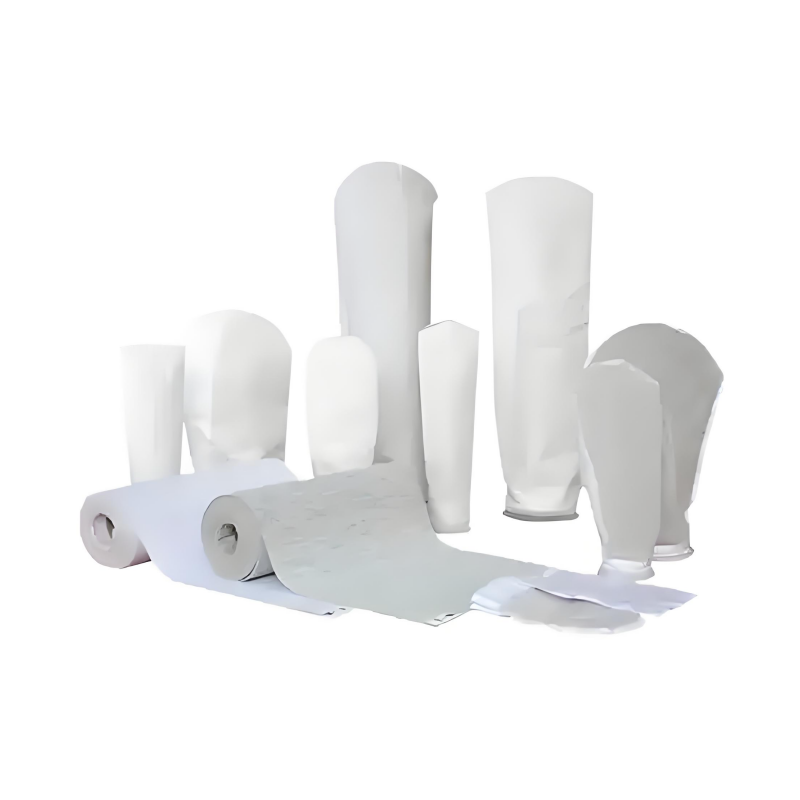
Coarse prefilters capture bulk contaminants, allowing fine liquid filter bags to operate purely for polishing and final specification control.
Successful implementation requires validating that existing pumps can overcome the combined differential pressure (Delta P) of two filter vessels in series.
Micron stepping must be engineered specifically for the fluid’s particulate distribution to prevent overlapping filtration duties.
Relying on a single fine filter creates a significant bottleneck in demanding industrial applications. Fine filters feature incredibly tight pore structures designed to capture microscopic debris. When large particles enter the housing, they cannot penetrate the media depth. Instead, they sit directly on the surface.
A high concentration of large particulates quickly forms an impermeable cake on a fine filter medium. We call this surface blinding. Fluid always takes the path of least resistance. When large debris blocks the tiny surface pores, pressure builds rapidly inside the vessel. This cuts the filter's operational life incredibly short. It renders the underlying depth material completely useless. Your system treats a thick, expensive filter as if it were a thin sheet of paper.
Fine absolute-rated filters cost a premium. Manufacturers engineer them using sophisticated microfiber layers to achieve precise retention ratings. Using them to catch rocks, pipe scale, or bulk sludge misallocates your resources. We frequently observe operators tossing out expensive fine filters daily. These filters remain virtually unused internally. Their outer surfaces are simply caked with mud. You end up paying for high-end polishing capability but utilize it for rough digging.
You must evaluate this problem in terms of labor and production halts. Changing a blinded filter stops production. If you change a filter six times a shift instead of once per shift, you severely impact manufacturing yield. Your operators spend their shifts wrestling with filter housings. They should spend that time monitoring critical process parameters. High intervention rates introduce unwanted air into the piping. They also increase the risk of accidental spills and operator fatigue.
Assuming a tighter mesh automatically equals cleaner fluid without checking the incoming particle load.
Installing a 1-micron filter to solve a haziness issue while ignoring heavy 50-micron sand loads.
Ignoring pressure gauge readings and letting the filter run until flow stops completely.
Engineering a two-stage system requires a clear financial justification. You must prove the upfront investment yields long-term operational savings. Evaluating your current pain points establishes a reliable baseline.
You should immediately audit your current changeout frequency. Follow these steps to establish a reliable baseline metric:
Log the exact number of filter changes required per shift over one week.
Record the differential pressure at the exact moment operators pull the filter.
Inspect the spent media visually for heavy surface caking or large debris.
A general industry threshold exists. If your fine filters require changing more than once per shift due to high solids loading, a prefilter is usually justified. Excessive changes signal an unbalanced particulate load.
You must compare the upfront cost of installing a secondary vessel (CapEx) against the annualized savings (OpEx). The initial purchase includes the stainless steel housing, isolation valves, and installation labor. Your ongoing savings stem from reduced fine filter consumption and eliminated operator labor. Over a twelve-month period, the massive reduction in expensive consumable usage almost always dwarfs the initial hardware investment. This balance drives the decision.
You need to define a successful rollout before purchasing equipment. A successful two-stage implementation typically yields specific results. You should look for a 400% increase in the lifespan of the fine filter. You want to see stable, predictable differential pressure curves across your shifts. Most importantly, you must maintain or improve the final fluid quality. If the system hits these benchmarks, the engineering redesign is a success.
Financial Evaluation of Single-Stage vs. Two-Stage Filtration
Evaluation Metric | Single-Stage Fine Filtration | Two-Stage Filtration Setup |
|---|---|---|
Initial Equipment Cost (CapEx) | Low (One vessel required) | High (Two vessels and extra piping required) |
Consumable Spending (OpEx) | Very High (Frequent replacements) | Low (Maximized filter lifespan) |
Labor & Maintenance (OpEx) | High (Constant operator intervention) | Low (Predictable, scheduled maintenance) |
Process Stability | Poor (Frequent line stoppages) | Excellent (Continuous flow maintained) |
Choosing the correct hardware configuration dictates how well the two stages interact. You must match the physical filtration media to the specific contaminant profile of your fluid.
You must contrast using a metal basket strainer versus coarse mesh industrial liquid filter bags. Metal basket strainers work exceptionally well for very large debris exceeding 500 microns. Operators can remove them, wash them with a hose, and return them to service quickly. However, coarse mesh bags offer better efficiency for particles between 50 and 200 microns. Mesh bags provide a much larger surface area than standard perforated baskets. You can choose disposable versions or wash specific heavy-duty mesh variants depending on your facility's waste protocols.
We detail the standard plumbing configuration as a series setup. Fluid flows sequentially from the primary coarse vessel directly into the secondary fine vessel. You pipe the outlet of the first housing into the inlet of the second housing. You must install isolation valves between them. This allows operators to bypass or service the prefilter without draining the entire fine filter assembly. Proper valve placement saves hours of maintenance time.
You must discuss matching the prefilter material with the fine filter material. This matching relies heavily on chemical compatibility and temperature limits. Consider these common pairings:
Prefilter: Nylon monofilament mesh. It offers excellent strength and precision retention for larger particles.
Fine Filter: Polypropylene felt. It provides superb depth filtration and broad chemical resistance for polishing.
High-Temperature Fine Filter: Meltblown microfiber or polyester felt. They withstand aggressive thermal cycles where standard polypropylene might warp or fail.
Adding a prefilter solves many blinding issues, but it introduces new mechanical challenges. You must engineer the system to handle the physical changes in your piping network.
You must acknowledge a fundamental rule of fluid dynamics. Two filters in series inherently create more flow resistance than one. The fluid must push through two separate restriction points. This creates a higher initial pressure drop across the entire skid. You face the risk of pump starvation or diminished flow rates. If your current pump already operates at maximum capacity, adding a second vessel will reduce your final output volume. You must calculate the combined clean pressure drop before installation.
Discuss the physical reality of retrofitting an existing skid. Plant floor space represents premium real estate. Two-stage systems require significantly more floor space. You need room to swing the lids open on both housings simultaneously. You also need space for extra isolation valves, drain ports, and pressure gauges for both vessels. Piping headers must stretch further to accommodate the sequential flow path. You cannot simply squeeze a second housing into a tight corner and expect operators to service it safely.
Adding a housing means operators must follow a stricter, slightly more complex maintenance routine. They can no longer glance at a single gauge. They must monitor two separate differential pressure gauges. They must understand which gauge corresponds to which bag. Creating a clear Standard Operating Procedure (SOP) becomes vital. If an operator ignores the prefilter gauge, the coarse bag might rupture. A ruptured coarse bag dumps massive debris directly into the fine bag, immediately crashing the entire system.
Specifying the exact micron ratings determines the success of the two-stage approach. You cannot guess these numbers. You must engineer them based on particle data.
We provide a proven framework for micron selection. Avoid stepping down too aggressively. Do not jump from a 100-micron prefilter straight to a 1-micron fine filter. The massive gap means mid-sized particles (like 20-micron or 50-micron debris) will bypass the prefilter completely. They will slam into the 1-micron bag, causing the exact premature blinding you wanted to avoid. Use a steady 5:1 or 10:1 ratio. Stepping from 50 microns to 5 microns stages the workload safely and efficiently.
Micron Stepping Summary Chart
Incoming Debris Profile | Recommended Prefilter Stage | Recommended Fine Filter Stage | Step-Down Ratio |
|---|---|---|---|
Heavy Sand & Silt | 100 Micron (Mesh) | 10 Micron (Felt) | 10:1 |
Machining Coolant Chips | 50 Micron (Mesh) | 5 Micron (Felt) | 10:1 |
Fine Chemical Precipitate | 10 Micron (Felt) | 1 Micron (Microfiber) | 10:1 |
You should always test your fluid to understand the size variations of the contaminants. Send a sample to a lab for laser diffraction or sieve analysis. They will map a bell curve of your particle sizes. You want to size the prefilter to catch the top 70 to 80 percent of the mass load. This leaves only the smallest, finest particulates for the secondary stage. Guessing your particle distribution often leads to overlapping filtration duties, where one bag does all the work while the other remains empty.
Standard off-the-shelf products do not always fit complex viscosity profiles. We emphasize the value of working with manufacturers who offer customizable liquid filter bags. Adjusting the exact micron rating, collar type, and media thickness for both stages ensures peak performance. Heavy viscous fluids demand different surface treatments than light aqueous solutions. Partnering with a vendor who understands standard liquid filter bags allows you to tailor the system perfectly to your unique flow rates and pressure parameters.
Adding a coarse prefilter represents a strategic engineering trade-off. You trade upfront physical space and capital investment for long-term consumable savings and reliable process stability. The dual-stage approach fundamentally protects your most delicate, expensive media from heavy bulk contamination.
We recommend plant engineers take immediate action before purchasing new equipment. Install differential pressure gauges before and after your current single-stage filter today. Log your baseline blinding rates to understand the true financial impact of your current setup. Data drives the best engineering upgrades.
Proper filtration is about staging the workload efficiently. It is never just about installing the tightest mesh available and hoping for the best. When you balance the particulate load across two optimized vessels, your operation becomes more resilient, cost-effective, and dramatically easier to maintain.
A: Typically, a 5:1 to 10:1 ratio is standard. For example, you might place a 50-micron prefilter ahead of a 5-micron fine filter. The ideal gap depends entirely on your specific particle size distribution. Proper staging prevents overlapping duties and stops either bag from blinding prematurely.
A: It will increase your system pressure drop. If your current pump is already operating near its maximum head capacity, the flow rate will decrease. You must either upgrade your pump or size up the filter vessels to overcome the added fluid resistance.
A: Nylon and polyester mesh bags rated at 50 microns or higher can often be washed and reused several times. However, fine felt or meltblown bags cannot be washed. High-pressure washing destroys their internal fiber structure and ruins their filtration efficiency.
A: Each housing must have its own dedicated differential pressure gauges. You change the specific bag when its vessel reaches the manufacturer's recommended terminal pressure drop. This threshold is usually between 15 and 20 PSI for most standard industrial systems.