Views: 0 Author: Site Editor Publish Time: 2026-04-15 Origin: Site
Selecting the wrong filter media does not just reduce filtration efficiency. It accelerates equipment failure. It risks serious compliance breaches. Ultimately, poor choices inflate your maintenance costs unnecessarily. Polyester (PE) and Aramid are two of the most widely specified materials in industrial filtration today. You will often hear Aramid referred to by the brand name Nomex®. They cater to drastically different thermal, chemical, and budget requirements. You must understand these differences to optimize performance. This guide provides a direct, technical evaluation of Polyester versus Aramid. We help facility engineers and procurement teams make better decisions. You will learn how to balance initial costs against Total Cost of Ownership (TCO). We also explore how to ensure long-term operational reliability for your baghouse systems.
Temperature Limits: Polyester is strictly limited to moderate environments (up to 135°C/275°F), whereas Aramid excels in high-heat applications (up to 204°C/400°F).
Chemical Vulnerabilities: Both materials have distinct blind spots—Polyester struggles with high alkalinity, while Aramid is susceptible to hydrolysis in moist, acidic environments.
Cost vs. ROI: Aramid carries a 2x-3x higher upfront cost but often doubles or triples lifecycle longevity in harsh conditions, reducing downtime and TCO.
Versatility: While Aramid dominates hot, dry gas streams, Polyester's versatility allows it to cross over into liquid filtration applications alongside standard materials like Polypropylene.
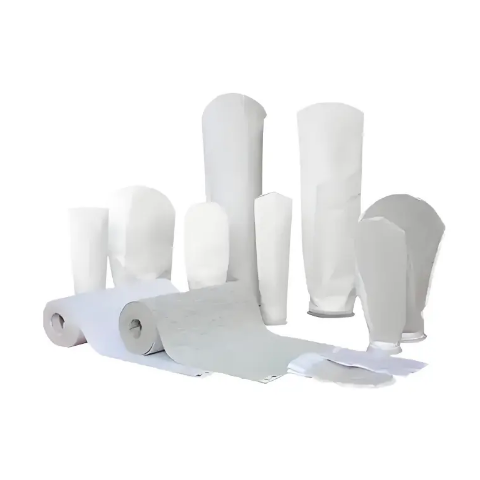
Polyester serves as the foundational workhorse for industrial dust collection systems worldwide. It delivers exceptional tensile strength. You also get excellent resistance to abrasive particulate matter. It maintains high dimensional stability under varying mechanical stress. Thermally, Polyester safely operates up to 135°C (275°F). This baseline makes it highly effective for moderate environments.
It is the best fit for general manufacturing and woodworking applications. Cement plants and ambient-temperature nuisance dust collectors rely heavily on it. Budget efficiency drives the primary decision here. When temperatures stay low and chemical exposure remains minimal, Polyester provides unmatched value. Facilities can replace these bags cost-effectively during routine annual maintenance.
Aramid handles the extreme conditions rapidly destroying lesser fabrics. It provides inherent flame retardance at the molecular level. The fibers demonstrate extreme resilience to repeated mechanical flexing. This flexibility matters heavily during aggressive pulse-jet cleaning cycles. Aramid also boasts superior high-temp tensile strength. Note: Aramid represents the generic chemical fiber category. Nomex® is a specific, well-known DuPont trademark.
Aramid sustains continuous operation up to 204°C (400°F). It is the definitive best fit for asphalt plants. Metal processing facilities, foundries, and power generation plants depend on it completely. These environments face spark risks and extreme heat daily. Standard materials would melt or catch fire under these exact same conditions.
| Feature | Polyester (PE) | Aramid (Nomex®) |
| Max Continuous Temp | 135°C (275°F) | 204°C (400°F) |
| Tensile Strength | Excellent | Excellent (High-Temp) |
| Abrasion Resistance | Very Good | Excellent |
| Flame Retardance | Poor | Outstanding (Inherent) |
| Primary Application | Ambient/Moderate Dust | Extreme Heat/Sparks |
Engineers must look beyond basic specification sheets. Real-world baghouse environments fluctuate constantly. Let us explore the primary dimensions governing your filter performance.
Operating at the absolute maximum thermal rating guarantees early failure. Engineers should design systems operating well below maximum limits. Keep baseline temperatures at least 50°F (approx. 28°C) under the threshold. Following this margin rule provides massive operational benefits.
It can extend your filter bag lifecycle by 30% to 50%.
It protects the polymer chains from unexpected, sudden heat spikes.
It prevents early embrittlement caused by prolonged thermal stress.
Moisture introduces severe complications for certain synthetic fibers. Aramid is highly vulnerable to a process called hydrolysis. This involves rapid chemical breakdown caused by combining water and acid. Does your gas stream contain sulfur or halogens? Do you also have high humidity levels? If so, Aramid fibers will rapidly degrade. They lose their tensile strength entirely and fall apart.
Polyester offers moderate chemical resistance overall. However, it will fail prematurely under strong alkaline exposure. Severe acid dew-point fluctuations also break Polyester down quickly. You must audit your gas chemistry to prevent these hidden degradation cycles.
Safety compliance dictates material selection across many heavy industries. Facilities often process volatile dusts governed by strict federal regulations. OSHA and NFPA standards closely monitor these combustible environments. You cannot afford to ignore explosion risks.
Aramid’s natural flame-retardant properties offer a critical layer of safety. This characteristic helps prevent catastrophic baghouse deflagration. If a stray spark travels through the ductwork, Aramid resists ignition. Polyester, conversely, can melt and contribute to the fuel load.
Procurement teams often focus solely on the initial invoice. This approach fundamentally misunderstands industrial filtration economics. You must look at the larger financial picture.
Aramid demands a much higher initial capital investment. These premium filter bags typically cost two to three times more. Standard Polyester bags look highly attractive by comparison. A facility manager trying to cut immediate quarterly expenses will naturally gravitate toward Polyester.
You must evaluate performance under actual operational stress. In environments exceeding 135°C, Polyester will embrittle and snap. It cannot handle the ongoing thermal load. Aramid absorbs this heat effortlessly. It withstands the mechanical stress of constant pulse-jet cleaning. Properly maintained Aramid routinely pushes service life past the 3-to-5-year mark. Polyester replacing fails every six months in the exact same hot environment.
Your purchasing decision should never rest on the invoice price alone. You must factor in hidden operational penalties. We recommend calculating TCO using these specific variables:
Unscheduled Downtime: Calculate the lost revenue per hour when the baghouse fails unexpectedly.
Labor Costs: Measure the expensive hours required for confined-space bag change-outs.
Production Pauses: Factor in the systemic slowdowns caused by poor facility airflow.
Energy Consumption: Assess the fan power required to pull air through degraded, blinded bags.
When you combine these factors, the higher upfront cost shrinks. Aramid often becomes the far more economical choice for high-stress baghouses. Paying more on day one saves thousands of dollars over three years.
Filtration media selection shifts drastically when moving between processing phases. We see this often when transitioning from dry particulate collection to fluid processing. You must adjust your material strategy accordingly.
Dry baghouses rely on capturing dust cakes in fast-moving gas streams. Liquid processing requires capturing suspended solids in dense, heavy fluids. The physical forces exerted on the media change completely. Tensile strength becomes even more critical due to fluid viscosity.
Aramid is strictly reserved for hot gas and air filtration. It does not cross over into wet applications due to cost and hydrolysis risks. Polyester, however, transitions seamlessly into the Liquid Filter Bag market. It offers extremely high tensile strength. It remains highly affordable for high-volume manufacturing. This makes it ideal for capturing liquid-suspended solids in general industrial fluid processing.
Sometimes, applications require strict chemical inertness. Other times, you need FDA-compliant liquid processing capabilities. Neither Aramid nor Polyester is optimal in these highly specific scenarios. You must pivot to specialized plastics.
In these situations, Polypropylene Liquid Filter Bags become the industry standard. They deliver broad chemical compatibility across diverse, aggressive fluids. Their hydrophobic nature resists moisture degradation perfectly. Furthermore, they feature zero-leaching characteristics. This ensures food-grade safety and prevents batch contamination.
Even the best materials fail if you ignore system realities. We constantly observe several critical maintenance red flags in the field. Avoiding these mistakes protects your investment.
Moisture destroys dry filtration mechanics incredibly fast. If system moisture exceeds 25%, dry baghouse filtration becomes largely ineffective. This failure happens regardless of your chosen material. The resulting wet dust cake will inevitably blind the bags. It turns into a thick mud blocking all airflow. You must then shift to wet scrubbers or alternative liquid separation methods.
Facilities often crank up pulse-jet pressure to clear stubborn dust. Applying excessive cleaning pressure reduces the lifespan of both materials. You can lose up to 40% of the bag's operational life. Aramid handles mechanical stress much better than fiberglass. However, over-pulsing will still cause profound fiber fatigue over time. Keep compressed air pressures strictly within the manufacturer's recommended range.
This is a massive oversight during major maintenance turnarounds. Sometimes you replace more than 10% of the baghouse inventory. Failing to precondition the new Polyester or Aramid bags is dangerous. You must coat them using a neutral dust layer first. Skipping this step results in immediate particulate bleed-through. It also creates a high potential for irreversible blinding deeply inside the fresh fibers.
Polyester remains the definitive choice for cost-conscious, ambient-to-moderate temperature applications. It provides excellent mechanical strength and broad utility across dry and wet filtration. Aramid stands as a necessary, high-ROI investment for high-heat, combustible environments. You must ensure the system remains free from highly acidic moisture to protect it.
We recommend taking specific action-oriented next steps to protect your filtration systems:
Audit your baghouse's actual operating temperature baseline today.
Review your differential pressure history across the last two quarters to identify blinding trends.
Analyze the gas chemistry before placing your next filter media order.
Consult a filtration specialist to map out a customized TCO projection.
Making data-driven material choices prevents unexpected downtime. It stabilizes your maintenance budgets. It keeps your facility running cleanly and safely year-round.
A: Aramid is the generic classification for this class of heat-resistant synthetic fibers. Nomex® is a specific, proprietary brand of meta-aramid manufactured by DuPont. All Nomex is aramid, but not all aramid is Nomex. Both deliver exceptional high-temperature performance and inherent flame retardance for demanding baghouse applications.
A: Under moderate dust loads and stable ambient temperatures, Polyester bags typically last 2 to 4 years. Frequent temperature spikes, chemical exposure, or improper pulse-jet calibration will significantly shorten this expected lifespan. Regular differential pressure monitoring helps maximize their longevity.
A: No. Asphalt plant off-gases frequently exceed Polyester’s 135°C (275°F) thermal limit. This extreme heat causes rapid embrittlement and catastrophic failure. Aramid remains the standard specification for this specific application due to its 204°C (400°F) continuous operating capacity.


