Views: 0 Author: Site Editor Publish Time: 2026-05-13 Origin: Site
Industrial filtration functions as much more than a routine maintenance checklist item. It serves as a critical safeguard for regulatory compliance and continuous operational output. Standardized off-the-shelf filters often fail to account for unique operational variables like moisture spikes, abrasive particulates, or complex chemical streams.
When facilities rely on inadequate filtration media, they face immediate and costly risks. You might experience rapid bag blinding, dangerous bypass leaks, and escalating pressure drops across your entire system. These failures force system fans to overwork. They drive up energy consumption and trigger sudden, unplanned downtime.
For procurement and engineering teams, evaluating custom filtration requires looking far beyond the initial purchase price. We must meticulously assess the total cost of ownership, material compatibility, and construction integrity. You will learn how to specify the exact media configurations for both dry environments and complex wet processing pipelines to maximize long-term reliability.
Material-to-Environment Matching: Selecting the correct media (from standard felts to specialized high-temperature synthetics) directly mitigates premature failure from heat degradation or chemical attack.
Construction Defines Reliability: Advancements like fully fused welded seams and ePTFE membranes offer measurable improvements over traditional sewn seams by eliminating bypass leakage and improving dust cake release.
Comprehensive Sourcing: Industrial facilities often require combined solutions, necessitating a clear understanding of both dry baghouse parameters and specialized wet-process requirements like the liquid filter bag.
Accurate Specification: Precision in measuring (e.g., cell plate dimensions vs. stretched bag material) is critical for seamless OEM replacement and avoiding installation downtime.
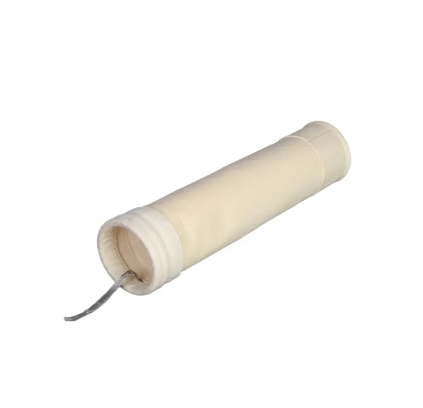
Many plant managers treat filter replacement as a basic commodity purchase. This mindset creates massive hidden operational expenses. When you mismatch filter media to your specific processing environment, you invite a severe problem called blinding. Microscopic pores clog permanently. Dust cakes refuse to release during routine cleaning cycles. Consequently, the differential pressure skyrockets across the baghouse tubesheet. To compensate for this restricted airflow, system fans consume significantly more electrical energy. This entirely bottlenecks your production line and reduces overall throughput.
Compliance and safety risks also escalate rapidly. Dust bypass events release fine particulate matter directly into the atmosphere. This violates stringent environmental regulations and invites immediate scrutiny. Inside the plant facility, combustible dust creates severe explosion hazards. Hazardous chemical exposure threatens daily operator safety. Regulators consistently issue steep fines for these preventable compliance breaches.
Customized bags often carry a higher upfront cost. However, they drastically improve your Total Cost of Ownership (TCO). Consider these primary ROI drivers when evaluating premium filtration:
Extended change-out intervals drastically reduce ongoing replacement frequency.
Fewer unexpected production halts keep your revenue streams flowing steadily.
Optimized system airflow lowers your monthly electrical consumption.
Reduced maintenance labor frees up your engineering team for higher-value tasks.
You invest more initially to secure predictable, highly profitable annualized savings.
Engineers must evaluate fabrics using a strictly objective framework. You must analyze continuous operating temperatures and specific chemical exposures before making a selection. Standard 16oz polyester felt works perfectly for basic nuisance dust. It provides excellent dimensional stability in dry, ambient conditions. However, extreme manufacturing environments necessitate immediate fabric upgrades.
Handling heat requires precise material matching. We frequently specify High Temperature Polyester Bags for moderate-heat applications. They handle continuous temperatures up to 275°F effortlessly. They also deliver exceptional abrasion resistance for rugged operations. If your process runs hotter, you must pivot. Aramid fabrics withstand up to 375°F. They perform beautifully in foundries or high-temperature dryers. For extreme environments like cement kilns or coal boilers, Fiberglass or Teflon media become mandatory. These advanced synthetics endure grueling temperatures up to 500°F.
Surface finishes also dictate ultimate performance. They directly impact both filtration efficiency and cleaning cycle frequency.
Singed Finish: Removes loose surface fibers. It provides a uniform surface for basic dust cake release.
Glazed Finish: Melts exterior fibers flat. It creates a smooth, eggshell-like surface ideal for sticky particulates.
ePTFE Membrane: Bonds a micro-porous film to the substrate. It guarantees near-zero emissions and the ultimate dust release capability.
| Filter Media Type | Max Continuous Temp (°F) | Ideal Industrial Application |
| Standard Polyester Felt | 275°F | General manufacturing, woodworking, ambient dust |
| High Temp Polyester | 275°F (with chemical resistance) | Moderate heat, high abrasion environments |
| Aramid (Nomex) | 375°F | Foundries, electric arc furnaces, hot dryers |
| Fiberglass | 500°F | Cement kilns, carbon black reactors |
| Teflon (PTFE) | 500°F | Severe chemical processing, coal-fired boilers |
Modern industrial facilities rarely manage just one type of waste stream. Chemical manufacturing, food processing, and pharmaceutical plants handle incredibly diverse materials daily. They manage both dry airborne particulates and complex wet slurry processes simultaneously. Procurement teams must source reliable solutions for the entire plant ecosystem.
This introduces the critical role of specialized wet filtration. A fully welded Liquid Filter Bag delivers unmatched reliability in volatile fluid streams. It functions as the ultimate gatekeeper for liquid purity. Fully welded configurations prevent fluid from bypassing the filter media entirely. They handle aggressive chemicals and thick, viscous fluids flawlessly under continuous pressure.
Wet and dry filters require entirely different structural integrity profiles. Liquid filtration must manage dense, heavy fluids pushed under continuous pump pressure. These bags need rigid ring closures to ensure perfect vessel sealing. They also demand exact micron ratings to capture microscopic slurry particles effectively. Conversely, dry dust collection focuses heavily on airflow dynamics, cake release properties, and air-to-cloth ratios. Despite these vast differences, plants need a unified standard of manufacturing quality. Sourcing all filtration from a supplier following ISO 9001:2015 equivalents ensures consistent, plant-wide reliability.
Upgrading your physical filter configuration unlocks massive hidden capacity. Many plants struggle simply because they outgrow their original baghouse equipment. Before you purchase a completely new dust collector system, evaluate pleated upgrades carefully.
Retrofitting traditional bags using pleated filters offers a highly lucrative ROI. The primary benefit is mathematically straightforward. Pleated designs increase your active filtration surface area by 2x to 3x. They fit directly into your existing equipment footprint. You achieve significantly higher production capacities instantly. You handle heavier dust loads with ease. You completely avoid buying a larger baghouse entirely.
Seam technology also defines your long-term operational durability. We can objectively compare the two primary manufacturing methods. Automated 3-needle sewn seams represent the current industry standard. They work well for standard ambient applications. However, fully fused welded seams dominate high-performance environments. Welded seams completely eliminate mechanical needle holes. They remove the primary pathway for fine dust bypass. They also dramatically increase the overall burst strength of the media under intense pressure.
Finally, your hardware and fitments must perfectly match your specific cleaning mechanism. Consider these essential configurations:
Pulse Jet Systems: Require top load designs or snap band cuffs. They endure violent blasts of compressed air repeatedly.
Reverse Air Systems: Utilize anti-collapse rings. Air flows in the opposite direction to gently release dust.
Shaker Systems: Need custom beaded cuffs or disposable caps. Mechanical shaking physically dislodges the built-up cake.
Buying replacement bags directly from original equipment manufacturers drains maintenance budgets unnecessarily. You can easily avoid these steep OEM markups. Custom filtration manufacturers produce exact "perfect match" replacements. They engineer them for all major equipment brands globally. You get the exact same premium quality. You simply stop paying inflated proprietary manufacturer premiums.
However, your success depends entirely on accurate measurement. The measurement reality catches many experienced plant engineers off guard. Never measure a used, stretched, and dirty bag. Operational tension and heavy dust loads warp the fabric permanently over time. Measuring a used bag practically guarantees you will order the wrong size.
You must supply custom manufacturers using specific, precise data. Gather the following critical inputs before requesting any formal quote:
Cell Plate Dimensions: Measure the exact inside diameter of the tubesheet hole. This dictates the primary sealing mechanism.
Snapband Size: Determine the exact fitment required to securely lock the bag into place.
Flat Width or Diameter: Calculate the true diameter of a brand-new, unstretched replacement bag.
Overall Length: Measure carefully from the absolute top to the absolute bottom of the assembly.
Specialty Features: Note any specific environmental add-ons. You might need heavy-duty wear strips to prevent abrasion. You might need embedded grounding wires for strict anti-static requirements.
Custom filter bags represent a highly strategic engineering decision. They are never just a basic procurement line item. Your long-term operational success relies heavily on absolute precision. You must carefully match temperature thresholds, chemical resistance, seam construction, and exact equipment dimensions. Treating filters as generic commodities guarantees inefficient operations and dangerous compliance failures.
Facilities engineers and plant managers should take proactive, immediate action. Conduct a thorough operational audit of your current baghouse systems today. Record differential pressure drops accurately over a thirty-day period. Analyze your true change-out frequencies and calculate the associated maintenance labor costs. Next, consult directly with a custom filtration manufacturer. Request a comprehensive media upgrade analysis to discover your optimal, customized configuration.
A: You must evaluate your continuous operating temperature limits. High temperature polyester performs reliably up to 275°F. However, if your process experiences unexpected temperature surges above this threshold, polyester will degrade rapidly. Aramid handles continuous exposure up to 375°F. Monitor your system exhaust temperatures during peak production. If spikes regularly exceed 275°F, upgrade to Aramid immediately.
A: A fully welded liquid filter bag provides zero-bypass reliability. Traditional sewing creates thousands of tiny needle holes in the fabric. Viscous fluids and fine particulates can easily escape through these punctures under pressure. Welded seams melt the media together perfectly. This process creates superior structural integrity, eliminates fluid bypass, and safely withstands higher pump pressures.
A: Yes. Manufacturers design top-loading snap-band pleated bags to fit directly into standard tubesheets. You simply remove the old tubular bag and cage assembly. The new pleated filter drops straight into the existing hole. This simple retrofit requires zero steel modifications while instantly doubling or tripling your active filtration surface area.
A: Never rely strictly on a basic calendar timeline. You should replace bags based on specific performance monitoring metrics. Watch for persistent differential pressure drop trends across the tubesheet. Look for signs of irreversible blinding where pores permanently clog. Inspect the fabric for severe physical abrasion. Replace them when standard cleaning cycles no longer restore normal airflow.


