Views: 0 Author: Site Editor Publish Time: 2026-05-06 Origin: Site
Industrial facilities rely heavily on efficient dust collection. It acts as the respiratory system of your plant. Specifying the wrong industrial filtration media leads to premature blinding, sudden spikes in differential pressure (ΔP), and unexpected facility downtime. A successful filter bag specification balances regulatory compliance (OSHA/NFPA), operational longevity, and lifecycle cost against the physical and chemical realities of your process dust. Guessing on fabric weights or surface treatments costs money and threatens workplace safety.
This guide breaks down material science, surface treatments, and procurement logic for industrial filtration systems. We ensure facility managers and engineers make evidence-based, TCO-optimized decisions. You will learn how to evaluate your operational baseline, avoid common installation mistakes, and select the perfect media for your application.
Temperature & Chemistry dictate the baseline: Exceeding continuous operating temperatures (e.g., using Polyester above 275°F) or ignoring chemical moisture leads to rapid media degradation.
Surface vs. Depth filtration: Sourcing requirements differ fundamentally between airborne dust capture (surface/cake filtration) and fluid processing (e.g., selecting a liquid filter bag for depth filtration).
Treatments define performance: Base materials provide structure, but finishes (like PTFE membrane or singeing) dictate dust release efficiency and energy consumption.
Failure is rarely a manufacturing defect: Over 80% of premature bag failures stem from misaligned air-to-cloth ratios, blinding, or improper installation.
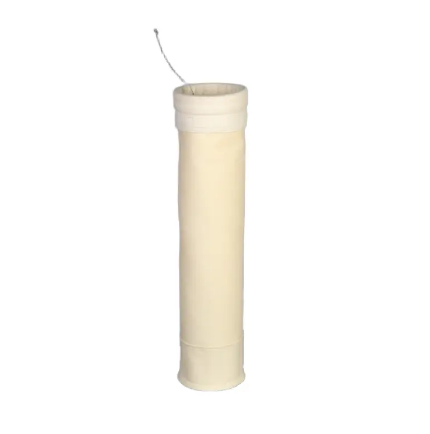
Engineers often make a common mistake during procurement. They rely strictly on cost per unit. Base material selection cannot rely on cost alone. We must evaluate options systematically. Use these six operational dimensions before reviewing material data sheets. This framework aligns technical specifications against real-world plant conditions.
Temperature Thresholds: You must distinguish between continuous operating temperature and maximum surge temperature. Continuous temperature represents standard daily operations. Surge temperature is the absolute peak heat a fabric can survive for brief moments. Designing for surges prevents catastrophic meltdowns.
Moisture and Chemistry (Dew Point Risks): Evaluate the risk of acid or alkali attacks. Process gases often contain hidden moisture. When these gases cool below the dew point, they create highly corrosive condensate. This chemical moisture rapidly degrades standard polymers.
Abrasiveness & Particle Size: Hard, jagged particulates behave like sandpaper inside the collector. Silica and metal dust require heavier ounce-weight fabrics. You should look for 16oz to 22oz per square yard. Durable fiber structures like P84 or Aramid prevent premature wearing.
Combustibility & Safety: Explosive risks demand strict mitigation. You must comply with NFPA 660 requirements. Anti-static materials use woven conductive grids. They safely dissipate static charges away from explosive dust layers, avoiding catastrophic facility events.
Filtration Velocity (Air-to-Cloth Ratio): Understand how your system's CFM ratio impacts media choice. Air-to-cloth ratio measures how much air passes through one square foot of fabric. Lower ratios allow for less aggressive media. High ratios demand robust, high-efficiency fabrics to withstand the rapid airflow.
Gas Stream Chemistry: Evaluate specific chemical exposures. Acidic environments destroy certain polymers while others thrive. Always match the chemical resistance profile to your specific process output.
Let us explore the core fabric types used in industrial baghouses. Each material possesses unique strengths. Choosing incorrectly guarantees rapid failure and unwanted maintenance costs.
Polyester serves as the workhorse for dry, ambient applications. We see it extensively in woodworking and food processing. It boasts a continuous rating up to 275°F. However, it remains highly vulnerable to moist heat. This vulnerability causes hydrolysis. Hydrolysis literally dissolves the fabric fibers under wet, hot conditions. Never use standard polyester if moisture and heat combine in your process.
Polypropylene offers excellent moisture and chemical resistance. It easily handles aggressive environments. Unfortunately, it is limited to a strict 170°F maximum temperature. Acrylic performs well up to 265°F. It excels in high-moisture and moderate-chemical environments. You will often find acrylic in cement or smelting applications facing severe moisture challenges.
Aramid supports continuous operation up to 400°F. It represents the industry standard for extreme conditions. Cement plants, foundries, and asphalt facilities rely on it heavily. Aramid withstands hot, abrasive dust effortlessly. It maintains dimensional stability even under intense stress.
Both materials hold ratings up to 500°F. Fiberglass offers exceptional heat resistance but remains physically brittle. It requires careful cage matching to avoid flex fatigue. P84 provides superior flexibility. It suffers less wear and offers high acid resistance. The tri-lobal fiber shape of P84 also improves fine dust capture immensely.
PTFE stands at the top of the performance pyramid. It handles 500°F+ temperatures easily. It features near-universal chemical resistance. The extremely high upfront cost often causes hesitation. However, this premium is justifiable in severe environments. When downtime costs eclipse material premiums, PTFE becomes the most economical choice overall.
| Material Type | Max Continuous Temp (°F) | Acid Resistance | Alkali Resistance | Abrasion Resistance |
| Polyester | 275 | Fair | Fair | Excellent |
| Polypropylene | 170 | Excellent | Excellent | Good |
| Acrylic | 265 | Good | Fair | Good |
| Aramid (Nomex) | 400 | Fair | Good | Excellent |
| Fiberglass | 500 | Fair to Good | Fair | Poor (Brittle) |
| P84 | 500 | Excellent | Fair | Good |
| PTFE (Teflon) | 500+ | Excellent | Excellent | Fair |
Facilities managing both air quality and fluid processing often overlap material types. For example, a plant might buy Polypropylene for two entirely different departments. Procurement clarity is crucial here. The engineering principles behind these products are exact opposites.
Dust collectors rely exclusively on surface filtration. They build a dust cake on the exterior. This cake effectively traps PM2.5 particulates before they escape the stack. Conversely, fluid processing demands depth filtration. When you select a Liquid Filter Bag, it utilizes the entire thickness of the media. The felt traps particulate throughout its internal structure. This structural depth prevents fluid bypass entirely.
Cross-specifying materials for wet processes causes immediate failure. Aggressive solvents and industrial wastewater require specialized construction. Standard dust media simply fails under these physical conditions. Chemical Resistant Liquid Filter Bags typically utilize fully welded Polypropylene or PTFE seams. Welded seams prevent liquid from sneaking past the filter matrix. Dust bags use heavy-duty stitched seams instead. Manufacturers design these stitched seams specifically for pneumatic pulse stress, not liquid retention.
Never substitute a gas-phase filter fabric for a liquid filtration process. This rule applies even if the base polymer is identical. The permeability metrics are completely different. Air systems measure CFM (Cubic Feet per Minute). Liquid systems measure GPM (Gallons per Minute). Furthermore, yarn structures differ vastly. Spun yarns handle dust well, while continuous filament yarns suit liquids better. They remain completely incompatible.
Base materials provide structural integrity. However, surface finishes truly dictate operational performance. The right finish acts as a powerful TCO and ROI driver.
Properly treated surfaces reduce compressed air usage during pulse-jet cleaning. They also lower the system's differential pressure. Lower pressure drops mean your fan motors consume significantly less electricity.
These represent the two most common mechanical finishes in the industry.
Singeing: Manufacturers melt loose fibers via an open flame. It is the most cost-effective standard for preventing dust adhesion. A singed surface prevents dust from embedding deeply into the felt.
Glazing: This involves heat-rolling the fabric. It creates a much smoother surface for sticky dust. However, glazing can reduce overall permeability. Engineers must balance cake release against airflow restriction.
This premium finish involves thermal bonding. Manufacturers attach a micro-porous Teflon layer to the exterior. It acts as an absolute barrier.
ROI framing: A PTFE membrane costs significantly more upfront. Yet, it captures sub-micron dust effortlessly. It creates the ultimate cake release. This efficiency saves massive amounts of electrical energy on fan operation. It also extends bag life dramatically, offsetting the initial purchase price.
Certain environments present unique safety hazards. Oleophobic (oil-repellent) treatments are necessary for oily or wet dust. They prevent moisture from blinding the fabric pores. Anti-static treatments remain critical for safety. Applications requiring static dissipation prevent the ignition of explosive dust layers. They keep combustible accumulation safely below the strict OSHA 1/32-inch limit.
Even the best materials fail if installed incorrectly or operated poorly. Diagnostic awareness prevents minor issues from becoming catastrophic failures.
A healthy baghouse maintains a ΔP (differential pressure) of 3 to 6 inches of water gauge. You must monitor this metric daily. If ΔP remains stubbornly high immediately after a cleaning cycle, trouble is brewing. Similarly, look for visible dust streaks in the clean air plenum. These symptoms indicate that blinding or tearing has already occurred. You must act quickly to isolate the problem.
Over 80% of premature failures stem from installation errors or operational mistakes. Let us review the most critical risks.
Cage Tension: Overtightening snap bands causes mechanical abrasion. Mismatched cage diameters also rub incorrectly against the fabric. This constant friction tears holes in the media quickly.
Thermal Shock: High-temp applications require operational discipline. If you use Fiberglass or Aramid, shutting down without gradual cooling causes severe thermal stress. The fabric degrades rapidly under sudden temperature drops.
Batch Replacement: Always replace filter bags in complete sets. This is a non-negotiable best practice. Mixing old and new bags forces clean air through the path of least resistance. The new bags take all the airflow and blind immediately.
Facility managers often face heavy CapEx decisions. Recurring failure issues demand scientific solutions. Laboratory dust testing is the definitive step before writing the final specification. Labs analyze particle geometry and chemical makeup. This hard data removes all guesswork from your procurement strategy.
Selecting industrial filter media is an exercise in risk management and operational math. It is never just about finding the lowest cost per bag. You must balance temperature limits, chemical exposures, and surface treatments to achieve true efficiency.
Next-Step Actions:
Audit your current differential pressure logs to establish a performance baseline.
Verify your operating temperatures against your current bag material’s published thermal thresholds.
Check your maintenance replacement schedules. Consider laboratory dust testing if your bag lifespan is currently under 18 months.
A: Aramid (Nomex) and P84 represent the best choices for abrasive environments. You must pair these durable fibers with heavier fabric weights, typically between 16oz and 22oz per square yard. This combination provides the structural integrity needed to withstand hard, jagged particulates like silica or metal shavings without premature wearing.
A: Micron ratings dictate filtration efficiency. Lower micron ratings trap much finer dust particles, improving air quality. However, they also increase the system's pressure drop. This restriction requires more frequent pulse cleaning and higher fan energy. You must balance fine dust capture against operational energy costs.
A: No. Gas-phase and liquid systems use opposite engineering principles. Dust bags rely on surface filtration and stitched seams. Liquids require depth filtration to prevent bypass. You must use dedicated liquid filter bags featuring fully welded seams. Cross-specifying these products guarantees catastrophic fluid bypass and system failure.
A: There is no single ideal ratio. It varies strictly by dust type, material choice, and cleaning mechanism. For example, pulse-jet systems tolerate higher ratios than shaker systems. The ratio directly dictates bag longevity. Lower ratios reduce stress on the fabric, extending operational life significantly.


