Views: 0 Author: Site Editor Publish Time: 2026-04-01 Origin: Site
Selecting the wrong industrial filtration media does not just impact fluid purity. It creates cascading operational failures across your entire processing line. From unexpected pressure drops to microscopic bypasses, the financial stakes remain incredibly high. These failures throttle line speeds and contaminate entire downstream batches. Choosing between nylon and felt liquid filter bags requires deep evaluation. You must move beyond basic spec sheets to understand core filtration mechanisms. We also need to assess chemical compatibility and realistic maintenance labor. Cleaning and replacing media dictate your true operational expenses. This guide provides an evidence-based framework for evaluating these materials. You will learn how to match media types to specific fluid streams. Ultimately, this knowledge helps you optimize your Total Cost of Ownership.
Filtration Mechanism: Nylon relies on surface filtration (exact pore size, high flow, highly washable), while felt utilizes depth filtration (high dirt-holding capacity, traps gels, difficult to clean).
Operational Trade-offs: The initial cost savings of felt can be offset by higher replacement frequencies or labor-intensive cleaning cycles compared to reusable nylon mesh.
Bypass Prevention: Material choice must be paired with the correct structural design (e.g., welded seams and crush-seal plastic rings) to prevent unfiltered liquid bypass.
Material Versatility: Understanding polymer limitations in liquid applications directly translates to proper selection in related industrial systems, such as dust collection.
Choosing inadequate filtration media drains operational budgets quickly. We see many facilities underestimate the true cost of poor media selection. These hidden expenses compound daily.
Selecting media featuring an incorrect micron rating causes rapid surface blinding. Your system will experience unacceptable pressure drops almost immediately. Operators must then halt the production line repeatedly. They replace clogged bags long before scheduled maintenance windows. This unplanned downtime destroys daily production quotas. It creates massive bottlenecks across all downstream operations. You lose revenue every minute the line sits idle.
Filtration bypass occurs when fluid escapes around or through damaged media. Microscopic contaminants evade capture due to poor material strength. High-pressure environments easily tear weak fibers. Inferior ring seals also allow dirty fluid to leak around the edges. You might not notice this bypass until quality control rejects an entire batch. The financial penalty of scrapped products far exceeds the price of premium filter bags.
The industry often relies on nominal efficiency ratings for liquid filter bags. However, a nominal rating usually guarantees only 65% to 70% capture efficiency. Manufacturers simply estimate the particle sizes the bag will retain. If you run mission-critical processes, nominal bags introduce severe purity risks. You should upgrade to absolute multi-layer designs. Absolute bags guarantee 99% retention of specified particles. This distinction remains crucial for sensitive chemical and pharmaceutical applications.
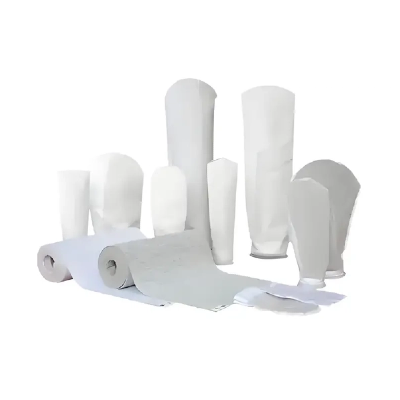
Understanding how these materials trap particles helps you choose the right tool. They operate on entirely different physical principles.
Nylon filter bags use a woven monofilament structure. They act exactly like precision screens.
Surface Filtration: Contaminants hit the woven grid and stop at the surface. The fluid passes straight through the open pores.
Precision & Flow: The manufacturing process creates uniform, square-shaped pores. You get precise micron retention every time. They handle high-velocity flow rates effortlessly. You will notice minimal pressure drops across the vessel.
Durability: Nylon boasts exceptional tensile strength. It offers outstanding abrasion resistance. You can subject these bags to heavy mechanical stress. They will not shed fibers into your clean fluid stream.
Felt bags look and feel like dense fabric. Manufacturers create them using synthetic fibers like Polypropylene or Polyester.
Depth Filtration: Machines mechanically entangle these fibers to form a thick maze. The media captures particles throughout its entire thickness. It traps contaminants deep inside the fabric matrix.
Dirt-Holding Capacity: Felt delivers a superior ability to absorb high volumes of dirt. It handles solid particulates and deformable gelatinous contaminants well. The bag absorbs massive loads before immediate surface blinding occurs.
Surface Treatments: Untreated felt can shed fibers downstream. Manufacturers apply singed or glazed finishes to the exterior. This heat treatment prevents fiber migration into your clean fluid.
| Feature | Nylon Monofilament Mesh | Needle-Punched Felt |
|---|---|---|
| Primary Mechanism | Surface Filtration | Depth Filtration |
| Flow Rate | Extremely High | Moderate to High |
| Contaminant Type | Hard, crystalline particles | Deformable gels, heavy dirt loads |
| Fiber Shedding Risk | Zero (continuous filament) | Low (requires singed/glazed finish) |
You must evaluate your operating environment before purchasing filter bags. Temperature limits and chemical exposure dictate material survival.
Nylon Capabilities: Nylon provides exceptional resistance to alkalis. It handles organic solvents beautifully. You can operate nylon bags safely up to 120°C (250°F). However, nylon remains very weak against strong acids. Acids will quickly degrade the woven fibers.
Felt Capabilities (PP/PE): You typically find felt bags in two primary polymer options.
Polypropylene (PP): PP offers excellent resistance against strong acids and alkalis. It represents the most versatile chemical choice. However, PP remains strictly limited to lower temperatures. You must keep operations below 90°C (200°F).
Polyester (PE): PE provides better mechanical strength than PP. It tolerates higher heat limits safely. You can run PE bags up to 150°C (300°F). Unfortunately, PE remains highly vulnerable to strong alkalis.
Your fluid viscosity strongly influences material selection. High-viscosity fluids demand careful consideration. Heavy liquids push gelatinous contaminants deep into depth-matrix felt bags. They trap the gels efficiently without clogging instantly. Alternatively, precision screen nylon bags work best for water-like fluids. Nylon stops hard, crystalline particles perfectly at the surface. You must measure fluid specific gravity carefully. This data helps you match the media type to your exact process parameters.
Polymer science remains consistent across different industrial applications. Liquid filtration principles overlap heavily with air and gas purification systems.
The foundational properties of needle-punched felt dictate performance globally. A polymer behaves similarly whether submerged in liquid or exposed to gas. Chemical resistance parameters remain identical. Thermal degradation limits do not change. We use this engineering continuity to design robust dry filtration environments.
Specialized felt plays a critical role in airborne particulate control. Industrial facilities rely heavily on Dust Collector Filter Bags to maintain ambient air quality. Capturing fine particulate matter requires specific fiber treatments. Manufacturers adjust the material weights to optimize airflow. The depth filtration mechanism traps airborne dust perfectly within the thick fabric matrix.
Standard PE and PP bags have strict thermal limits. Many industrial applications exceed these limits easily. Cement kilns, power plants, and chemical processing facilities generate intense heat. They also produce aggressive chemical vapors. In these scenarios, systems must shift to specialized, high-performance polymers. Standard liquid felt materials would melt or disintegrate instantly.
We see massive demand for advanced polymers in harsh environments. Facilities use High-Temp Aramid Filter Bags (often known as Nomex) for intense heat conditions. Aramid fibers withstand continuous exposure to extreme temperatures easily. Conversely, facilities dealing with corrosive gas streams need chemical immunity. They deploy Acid-Resistant PPS Filter Bags to prevent rapid material degradation. These advanced solutions ensure continuous operation under extreme stress.
Material purchase price represents only a fraction of your true costs. Maintenance labor and replacement frequency drive the final operational budget.
The Nylon Advantage: Nylon mesh provides a massive lifecycle advantage. Real-world maintenance feedback shows incredible results. Operators often clean nylon mesh in just a few minutes. A simple sink rinse removes most surface contaminants. Stubborn particles dissolve quickly during a mild solvent soak. This extreme washability drastically extends the filter bag lifecycle.
The Felt Reality: Felt bags absorb dirt deeply into their matrix. Deeply embedded contaminants make felt notoriously difficult to wash. Facilities often attempt harsh machine washing cycles. These aggressive cycles damage the fibers and alter micron ratings. Operators also risk secondary contamination from bleach or detergent residues. Therefore, the industry predominantly treats felt bags as an economical, single-use consumable.
Labor vs. Unit Cost ROI: You must balance opposing financial factors carefully. Reusable nylon bags carry a higher initial purchase price. However, they slash your recurring procurement expenses. Single-use felt bags cost much less upfront. Yet, constant replacement drives up your disposal costs and maintenance labor.
Material selection fails entirely if the bag construction remains flawed.
Seam Integrity: Traditional filter bags use 5-thread sewn seams. Needles punch hundreds of tiny holes through the fabric. These holes are prone to needle-hole bypass under high pressure. Fluid escapes without passing through the media. Precision-welded seams eliminate this problem entirely. Manufacturers fuse the edges together using heat. This creates a solid, impenetrable barrier.
Sealing Technology: The top ring secures the bag inside the vessel housing. Standard steel rings often rely on generic fabric to seal the gap. They can warp or shift during operation. Upgrading to plastic crush-seal flanges solves this issue permanently. Downward vessel pressure forces the plastic lip to expand. It creates a true hermetic seal against the housing wall.
Follow this structured process to avoid costly procurement mistakes. Proper specification guarantees long-term system stability.
Step 1: Audit the Contaminant. Analyze the exact nature of your particulate load. Determine if the particles are hard and crystalline. If so, this favors a nylon mesh bag. Check if the contaminants are deformable or gelatinous. Gelatinous loads heavily favor a felt depth filter.
Step 2: Map the Environment. Document the absolute maximum operating temperatures your system reaches. Record the exact chemical pH levels of your fluid stream. Compare these metrics against the physical limits of PP, PE, and Nylon.
Step 3: Define Efficiency Needs. Evaluate your quality control requirements strictly. Choose economical nominal bags for basic pre-filtration tasks. If you need final polishing or mission-critical purity, upgrade immediately. Select multi-layer high-efficiency absolute bags.
Step 4: Requesting a Quote. Ensure your RFQs include specific, non-negotiable parameters. You must list the Material, Micron Rating, and Bag Size. Include the specific Ring Style and preferred Seam Type. Precise RFQs ensure accurate vendor matching and eliminate guesswork.
Navigating industrial liquid filtration media directly impacts your bottom line. Choose nylon monofilament mesh when precise surface filtration and high flow rates are paramount. Nylon delivers maximum reusability and minimizes labor costs over time. Choose needle-punched felt when dealing with high dirt loads or deformable contaminants. Felt remains unmatched when single-use economic disposability makes the most operational sense. Always prioritize proper sizing, welded seams, and crush-seal ring styles over mere material cost. Strong physical construction eliminates the true enemy of reliable filtration: bypass. Implement these strategies today to lower your total cost of ownership permanently.
A: No. While the base polymers are similar, liquid and dry bags require different designs. Dry dust media features varying fiber densities and specialized anti-static or hydrophobic treatments. Air systems also demand different structural reinforcements. You must use dedicated dust collector bags for airborne applications.
A: You should first reverse-flush the bag with clean water. Next, soak it in a mild solvent or warm soapy water to dissolve remaining residue. Rinse thoroughly in a sink. Avoid using stiff brushes. Abrasive scrubbing damages the monofilament threads and alters the micron rating.
A: Rapid clogging usually indicates an incorrect micron rating for your contaminant load. Unexpected fluid viscosity spikes also cause immediate blinding. Additionally, using surface-glazed felt in heavy gelatinous applications restricts depth absorption. The gels seal the glazed exterior before the interior matrix can work.
A: Nominal ratings represent an average estimation, typically capturing only 65-70% of targeted particles. Absolute ratings guarantee 99% or higher retention of a specific micron size. For strict quality control and mission-critical purity, always specify absolute-rated multi-layer filter bags.


