Views: 0 Author: Site Editor Publish Time: 2026-06-09 Origin: Site
Many manufacturers try adapting standard heavy-duty sewing equipment for filtration media. They soon discover a costly reality. Purpose-built industrial filter bag machinery functions completely differently. Standard machines punch gaping holes into specialized fabrics. These tiny openings cause immediate particle bypass. When unfiltered dust or liquid escapes, you face severe compliance failures. Your entire filtration system loses its efficiency and purpose.
Scaling businesses and new production managers face high stakes here. You cannot afford trial and error when specifying equipment for critical environments. You need absolute precision. This guide gives operational beginners a clear, vendor-neutral framework. We will help you evaluate different sealing technologies. You will learn how to shortlist the exact machines you need. We explain why specific materials demand distinct sealing methods. Ultimately, you will discover how to procure the right system to guarantee zero-defect production. Our goal is to streamline your decision-making process.
Standard heavy-duty sewing machines cannot maintain the continuous, leak-proof seam integrity required for commercial filtration.
The choice between traditional needle-and-thread sewing and ultrasonic welding depends entirely on your media (dust collection vs. liquid filtration) and material composition.
Investing in supplementary automated systems, such as tape sealers, is critical for high-temperature or zero-bypass applications.
Standard lockstitches fail in industrial filtration. They simply cannot meet modern regulatory standards. A traditional sewing machine uses a top thread and a bobbin thread. These threads interlock inside the fabric. This process creates distinct needle holes. In everyday apparel, these tiny holes do not matter. In filtration, they create disastrous leak paths.
Filter bags require specialized closures to maintain complete media integrity. Even microscopic openings allow dust particulate or contaminated liquids to escape. You must achieve a zero-bypass seam. Purpose-built machines use modified stitch types or completely different fusing methods to seal these microscopic gaps effectively.
Filtration materials behave differently than standard textiles. Common filter media includes PTFE, woven fiberglass, and needle-punched felt. These materials are incredibly abrasive. They are also exceptionally thick. They generate intense friction when passing through sewing equipment.
This friction destroys standard machine motors. Standard needles dull and snap within minutes of puncturing fiberglass. The intense heat generated by this friction also causes synthetic threads to melt. Industrial equipment mitigates these material realities using upgraded alloys, specialized coatings, and robust drive systems.
Using non-specialized equipment creates severe operational friction. Operators experience frequent thread breaks. They struggle to maintain consistent seam tension across varying fabric thicknesses. This leads to immense operator fatigue and slow production cycles.
Specialized machines eliminate these bottlenecks entirely. They pull heavy materials smoothly. They actively cool needles during high-speed operation. By reducing manual interventions, specialized equipment drastically improves your daily throughput. Production managers see fewer rejected batches and much higher overall quality.
This category remains the backbone of many manufacturing facilities. Double locked chainstitch equipment excels at specific applications.
Best for: Standard dust collection bags, heavy woven materials, and high-volume tubular seaming.
Key trait: It uses multiple threads to create an interlocking seam. This specific stitch type flexes securely. It expands safely with the bag under high pneumatic pressure.
These units differ from standard lockstitch models. A high-quality Filter Bag Sewing Machine forms a continuous chain. It avoids bobbin changes. This allows operators to sew long tubular sections without pausing. It delivers incredible speed for dry filtration applications.
Welding changes the rules of assembly. It completely removes needles from the equation.
Best for: Synthetic liquid filtration bags where needle holes are strictly prohibited.
Key trait: It uses high-frequency acoustic vibrations. These vibrations melt thermoplastic fibers instantly. They fuse the material together at the molecular level.
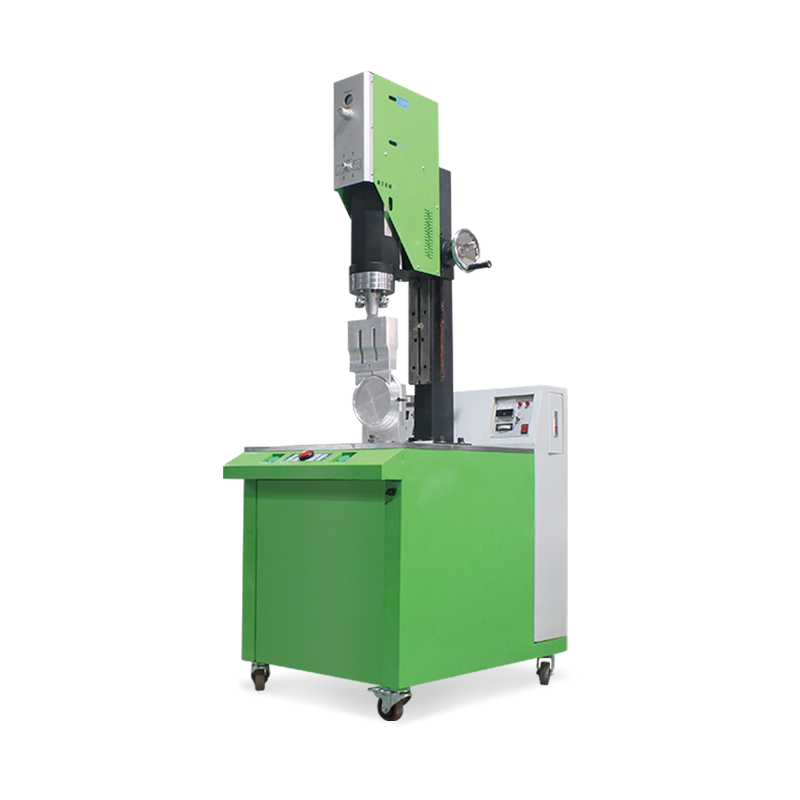
You will likely need an Ultrasonic Bag-top Welding Machine for Liquid Filter Bags to process materials like polypropylene. This method ensures a 100% leak-proof seal. Liquid filters operate under intense fluid pressure. Welded seams never fail under these stress conditions.
Some applications demand the strength of a stitch plus the seal of a weld. Taping systems bridge this gap perfectly.
Best for: Reinforcing stitched seams to prevent micro-dust escape.
Key trait: The machine applies a specialized thermal tape directly over the stitch line.
This secondary process is essential for high-end applications. Pharmaceutical production and chemical dust collection require absolute containment. Hot air welding melts the adhesive backing of the tape. Pressure rollers then press it firmly into the seam. It locks the microscopic needle holes away forever.
Process Type | Primary Application | Key Mechanism | Leak-Proof Level |
|---|---|---|---|
Double Locked Chainstitch | Dust Collection (Dry) | Interlocking thread chains | High (Flexes under pressure) |
Ultrasonic Welding | Liquid Filtration | High-frequency friction melting | Absolute (Zero needle holes) |
Thermal Seam Taping | Chemical / Pharma Dust | Hot air and pressure tape | Absolute (Seals existing holes) |
You must evaluate how the machine pulls abrasive filter media. Standard drop-feed systems fail instantly. They stretch the fabric and cause puckering. A walking foot mechanism steps over the fabric. This provides better control for medium materials.
However, heavy filtration media requires more power. Top and bottom compound feed systems are non-negotiable for thick needle-punched felts. These systems synchronize the needle, presser foot, and feed dog. They move heavy layers uniformly. Adding an active puller mechanism behind the needle prevents operator strain. It ensures perfect stitch length consistency.
Friction generates tremendous heat during heavy-duty sewing. Needles can reach temperatures exceeding 300 degrees Celsius. This heat instantly melts synthetic threads like polyester or nylon. It also damages the surrounding filter media.
You must specify pneumatic needle coolers. These systems blow compressed air directly onto the needle eye. Automated thread lubricators are also essential. They coat the thread in a specialized silicone fluid. This reduces friction dramatically. These two features prevent thread snapping and maintain continuous production.
Specialty filters operate in extreme environments. Asphalt plants and steel mills use high-temperature media. Sewing these materials requires highly robust equipment. You cannot compromise on machine specifications here.
When entering High-Temp Automated Filter Bag Tape Sealer Manufacturing, assess the hardware carefully. The machine must handle woven fiberglass and PTFE (Teflon) seamlessly. The feed dogs must not degrade the material's heat-resistant properties. The machine components must also withstand the abrasive dust generated by fiberglass.
Beginners often struggle choosing between manual setups and fully automated lines. Manual tabletop setups work for very small custom batches. However, they rely entirely on operator skill. Fully automated tube-forming lines produce thousands of units daily. They require massive upfront commitment.
We advise beginners to start with semi-automated workstations. Look for modular units. You can add automatic thread trimmers later. You can integrate conveyor belts as order volume increases. This scalable approach minimizes initial risk. It allows your operators to master the core sealing technology first.
Automated machines reduce heavy manual labor. However, they shift the skill requirements elsewhere. Operators must develop specialized diagnostic skills. They cannot simply step on a pedal and guide fabric anymore.
Ultrasonic welders demand precise calibration. Your team must understand how to adjust amplitude and pressure settings based on material batches. Slight variations in ambient humidity or fabric thickness require immediate tuning. Plan for comprehensive vendor training during installation. Do not expect plug-and-play simplicity.
Watch out for locked-in vendor ecosystems. Some manufacturers design machines requiring proprietary consumables. This creates supply chain vulnerabilities. You must evaluate consumable availability before purchasing.
Verify if an ultrasonic welder requires proprietary horns (sonotrodes). Custom horns often have long lead times. For sewing operations, check your thread compatibility. High-temperature threads like Kevlar, Aramid, or PTFE behave uniquely. Ensure your shortlisted machine processes standard industrial spools without demanding expensive, brand-specific thread cartridges.
Manufacturing filter bags generates massive amounts of particulate dust. This abrasive dust settles everywhere. It acts like sandpaper on moving machine parts. You must prioritize equipment designed for harsh environments.
Ensure your evaluated machines feature fully enclosed drive systems. Check for sealed bearings on all rotating shafts. Standard open-lubrication systems will mix oil with fiberglass dust. This creates a destructive grinding paste. Routine cleaning protocols remain vital. Buy machines offering easy access panels for daily compressed-air blowdowns.
Never start by looking at machine catalogs. Start with your product. Document your exact material specifications clearly. Note the fabric thickness, composition, and surface treatments. Define the end-use application precisely.
Is the bag for liquid filtration or air filtration? What is the maximum operating temperature? Does the environment involve corrosive chemicals? Answering these questions narrows your options immediately. It dictates whether you need a welder, a chainstitch machine, or a hot air taper.
Never buy industrial equipment based on a glossy spec sheet. You must demand tangible proof. Send a roll of your specific filter media to the machine vendor. Ask them to process it.
Demand that the vendor sews or welds your actual material. Have them return the physical samples to your facility. Perform rigorous burst testing on these seams. Check for leak paths under pressure. If the vendor refuses to provide a PoC, eliminate them from your shortlist.
Industrial machinery inevitably encounters downtime. Your vendor's support infrastructure determines your recovery speed. Prioritize manufacturers offering robust post-sale services.
Look for vendors providing remote diagnostic support via video link. Check their spare parts inventory. Parts must be readily available in your region. Finally, insist on comprehensive on-site installation training. A strong support network guarantees long-term production stability.
Finding the right filter bag sealing equipment requires a strategic approach. Standard sewing machines simply fail under industrial filtration demands. The right specialized machine aligns your production capacity with rigorous compliance standards. It ensures your seams withstand extreme pressures, harsh chemicals, and abrasive particles.
Beginners should focus on acquiring robust, semi-automated machines first. Prioritize equipment guaranteeing zero-defect seams over fully automated lines you cannot yet optimize. Validate your product quality before expanding your footprint. Avoid proprietary consumable traps. Always demand proof of concept testing.
Take action today. Compile your material specifications and daily production targets. Reach out to vetted industrial manufacturers. Request targeted quotes and physical sample testing. By following this framework, you secure equipment that elevates your product quality and protects your brand reputation.
A: While possible for low-volume, non-critical applications, standard machines lack needle cooling and continuous puller feeds, leading to melted threads and inconsistent tension on heavy filter felts.
A: Liquid filtration requires absolute zero bypass. Needles create microscopic holes that allow liquids to bypass the filter media. Ultrasonic welding fuses the material without puncturing it, ensuring absolute integrity.
A: Standard polyester will melt. High-temperature applications require PTFE (Teflon), fiberglass, or aramid (Kevlar) threads, which necessitate specialized tension settings and needle cooling mechanisms on the sewing machine.
A: Routine maintenance includes daily cleaning of heating elements, weekly calibration of feed rollers, and periodic inspection of pneumatic lines. It is vital to keep the sensors free from the abrasive dust generated by the filter media.