Views: 0 Author: Site Editor Publish Time: 2026-06-11 Origin: Site
Poorly fitting filtration media silently degrades system efficiency before you ever notice a problem. Installing incorrectly sized or specified filter bags leads to system bypass, rapid media blinding, and sudden drops in cubic feet per minute (CFM). Unfortunately, OEM equipment manuals often lack clear replacement specs. They leave maintenance teams guessing about dimensions and fabric requirements.
This ambiguity causes massive operational headaches. You risk uncontained dust, accelerated equipment wear, and unsafe facility conditions when particulates escape. This guide relies on rigorous engineering principles—such as air-to-cloth ratios and chemical compatibility—rather than vague marketing claims. We provide a definitive framework for measuring, evaluating, and sourcing the exact replacement filter bags required for your specific dust load and operating environment. You will learn how to calculate precise dimensions, verify blower capacities, and match specialized fabrics to harsh industrial conditions.
Correct sizing requires measuring the flat width and calculating the exact diameter, not just estimating the bag's visual footprint.
Physical dimensions must align with system airflow limits; an improper air-to-cloth ratio accelerates filter failure.
Operating environments dictate material choices: standard polyester suits basic woodworking, while extreme heat or chemical exposure requires specialized media like Aramid or PPS.
Upgrading to a finer micron rating (e.g., 1-micron) requires verifying your system's static pressure capacity to avoid choking the airflow.
Improperly sized filtration media disrupts internal aerodynamics. These physical mismatches trigger a cascading series of mechanical failures. Facility managers often underestimate how a fraction of an inch compromises the entire collector system.
Undersized bags create critical weak points at the tube sheet. The snap band or sealing ring cannot compress adequately against the metal cutout. This poor seal allows hazardous particulate to bypass the filtration stage entirely. Dust enters the clean air plenum and exhausts directly into the facility or atmosphere. System bypass immediately violates air quality permits. It also damages downstream components like blower impellers. Getting the exact dimensions of your dust collector filter bag prevents these hazardous leaks.
Oversized bags suffer from severe mechanical wear. When bags contain excess slack, they sway aggressively during operation. They rub against adjacent bags or strike the internal collector housing. We call this "bag-to-bag" abrasion. Furthermore, pulse-jet cleaning cycles aggressively inflate the media. An oversized bag snaps violently against its inner support cage. This repetitive striking breaks down the fabric fibers quickly, leading to premature ruptures.
Incorrect sizing fundamentally alters internal air velocity. When bags fit poorly, they distort the intended airflow pathways. The blower motor must work significantly harder to pull air through restricted or blinded sections. This forces static pressure to spike. Consequently, you face heavy energy penalties. The blower consumes more amperage while delivering less suction at the source. Machines like CNC routers or welding stations lose vital extraction power.
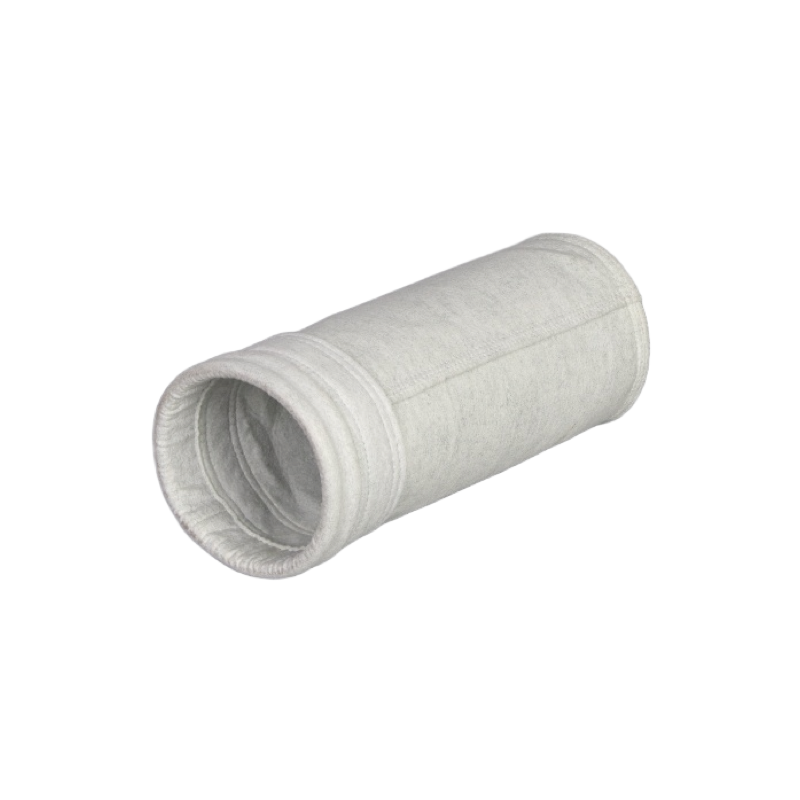
Ordering proper Dust Collector Filter Bags requires precise math. Guessing dimensions based on visual footprints leads to disastrous installation errors. Follow these steps to determine your exact specifications.
Never try to measure the diameter of a soft, round fabric tube directly. It always yields inaccurate numbers. Instead, measure the flattened bag. Lay the old bag flat on a table. Measure the distance straight across the width. Then, apply the exact diameter formula:
Formula: (Flat Width x 2) / 3.14159 = Exact Diameter
For example, if your flat width measures 7.5 inches. You multiply 7.5 by 2 to get 15. Divide 15 by 3.14159. Your exact diameter is 4.77 inches. This calculation removes all guesswork related to fabric distortion.
Length measurement requires specific reference points. Always measure from the very top of the sealing band to the absolute bottom of the disc. Do not measure old, end-of-life bags if possible. Heavy dust loads and continuous pulse-jet cleaning stretch the fabric over time. An old bag frequently elongates by 1% to 2%. Relying on a stretched measurement means you will order bags that hit the hopper bottom.
Bags use various termination styles to match different collector designs. You must identify both ends correctly.
Top Caps: Identify the sealing mechanism. Snap Band tops feature a flexible metal band sewn inside. Raw Edge tops fold over a cage. Flange tops have a rigid lip. Ring tops use a metal O-ring for tension.
Bottoms: Identify the closure style. Disc Bottoms feature a circular fabric patch sewn at the base. Flat Sewn bottoms simply stitch the tube shut. Wear Strip bottoms include extra fabric layers to resist hopper abrasion.
A common error involves measuring the hole in the tube sheet instead of the bag itself. Tube sheet holes differ slightly from the required bag diameter to accommodate snap band compression. Measuring the metal hole often leads to ordering bags boasting an incorrect snap band tolerance. Always measure the bag.
You cannot determine correct bag specifications without understanding airflow limits. The air-to-cloth ratio dictates how much particulate your system handles before failing.
The air-to-cloth (A/C) ratio represents the volume of air passing through one square foot of filter media. You calculate it by dividing the Total CFM by the Total Square Footage of the filter area. A lower ratio means the air moves slower through the fabric. This improves filtration efficiency and extends bag life.
Industry standards provide strict rules of thumb for A/C ratios based on specific dust types. Lighter, coarser dust tolerates higher ratios. Fine, heavy dust demands lower ratios to prevent blinding.
Dust Type / Application | Recommended A/C Ratio (Pulse-Jet Systems) | Filtration Challenge |
|---|---|---|
Coarse Wood Dust / Sawdust | 10:1 to 12:1 | Large particles easily release during cleaning cycles. |
Grain / Agricultural Dust | 8:1 to 10:1 | Moderate agglomeration risks require steady airflow. |
Cement / Fine Minerals | 6:1 to 8:1 | Heavy particulate density demands increased surface area. |
Fine Silica / Metallurgical Fumes | 4:1 to 6:1 | Sub-micron particles easily embed deep into the weave. |
Facilities rarely stay static. If your production capacity has increased since installing the dust collector, your CFM load likely increased too. Replacing bags using the exact same dimensions may no longer suffice. Pushing more air through the same square footage raises your A/C ratio beyond safe limits. To solve this, you might need pleated filter bags. Pleated designs pack significantly more square footage into the same physical diameter, thereby lowering the A/C ratio safely.
Physical dimensions represent only half the sizing equation. Operating environments strictly dictate your material choices. Selecting the wrong fabric causes immediate chemical or thermal degradation.
Most ambient manufacturing environments rely on standard Polyester or Polypropylene. These materials handle basic woodworking, metal grinding, and non-corrosive manufacturing perfectly. Polyester offers excellent dimensional stability and resists standard abrasion. Polypropylene excels in moist environments because it naturally resists water absorption. Both operate safely under 200°F.
Extreme heat melts standard polyester instantly. Applications exceeding 275°F (135°C), such as foundries, smelters, or asphalt plants, require specialized thermal protection. Aramid Fiber Filter Bags serve as the industry standard here. Aramid easily withstands continuous temperatures up to 400°F (204°C). However, you must observe one crucial implementation consideration: Aramid remains highly sensitive to hydrolysis. If high heat mixes with high moisture, the fibers break down rapidly. You must monitor moisture levels strictly when specifying Aramid.
Chemical processing presents a different challenge. High-sulfur and high-acid environments destroy standard fabrics. Coal-fired boilers, cement kilns, and waste incinerators generate aggressive chemical streams. You need Corrosion-Resistant PPS Filter Bags for Industrial Dust to survive these loads. PPS (Polyphenylene Sulfide) delivers superior performance against harsh acids and alkalis. You must balance this chemical resistance against strict temperature limitations. PPS typically maxes out at 375°F (190°C). Furthermore, PPS shows sensitivity to high oxygen levels. Evaluate your flue gas oxygen content before selecting PPS media.
Upgrading your base material often involves surface treatments to improve dust release. You should follow a clear decision logic:
Singed Finishes: A flame passes over the media to remove stray fibers. Use this for general dust to prevent particles from hanging onto the fabric.
Glazed Coatings: Heat and pressure melt the outermost fibers into a slick surface. Choose this for slightly sticky or agglomerating dusts.
PTFE Membranes: A microscopic layer of Teflon laminates to the fabric. This creates true surface filtration. Use PTFE for extremely fine dust, highly moisture-laden air, or severe blinding issues.
A massive debate dominates woodworking forums regarding micron ratings. Many operators believe a tighter weave automatically improves system performance. This assumption is technically flawed.
Buyers often view 5-micron bags as inferior. They rush to purchase 1-micron replacements, expecting pristine air quality. However, industrial filtration relies on developing a "dust cake." The initial layer of dust actually performs the fine filtration, not just the raw fabric. Upgrading arbitrarily ignores system physics.
Simply slapping a 1-micron bag onto a standard system creates severe bottlenecks. A tighter weave restricts airflow heavily. If your blower lacks the capacity to overcome this new restriction, the CFM drops drastically. The system chokes. Furthermore, fine weaves suffer from rapid blinding. Particulates jam into the micro-pores faster than pulse-jet cleaning can remove them. Your static pressure skyrockets while collection efficiency plummets.
Evaluate your primary dust hazard first. Sanding MDF or processing fine composites generates hazardous micro-dust. This scenario justifies a 1-micron bag. Conversely, standard wood chips or heavy metal shavings do perfectly fine with 5-micron media. Before upgrading to a tighter weave, check your blower's performance curve. Verify it can handle the increased static pressure resistance without starving the ductwork.
Once you determine your exact dimensions, A/C ratio, and material, you must select a vendor. The procurement process requires careful evaluation.
You face a choice between buying directly from the equipment brand or sourcing from specialized filter manufacturers. We chart the primary differences below.
Vendor Type | Advantages | Disadvantages |
|---|---|---|
Equipment OEM | Guaranteed part number match. Easy ordering process. | Higher markup. Limited material customization. Longer wait times for old models. |
Custom Filter Manufacturer | Exact-match physical specs. Broad access to specialized media (Aramid, PPS, PTFE). Better pricing. | Requires you to provide accurate measurements and operating data upfront. |
Third-party manufacturers often deliver superior value. They engineer exact-match specs while offering advanced material upgrades you cannot get from the original catalog.
Protect your facility by vetting suppliers rigorously. Ask these three critical questions:
Do they require a physical sample? Reputable custom manufacturers usually request a clean, unused sample or highly detailed photos to guarantee snap band tolerances.
Can they provide media specification sheets? Demand technical data. You need proof of permeability (CFM/sq ft) and Mullen burst strength to ensure fabric quality.
What are their lead times? Specialized media like PPS or Aramid often require longer manufacturing runs. Clarify delivery windows before your current bags fail.
Stop relying on guesswork. Take a clean bag from your inventory today. Measure the flat width using the formula provided earlier. Determine your exact length and termination styles. Then, contact an application engineer. Provide them your total CFM, dust type, temperature range, and physical dimensions. Secure a verified quote based on engineering facts.
Replacing filter media demands precision. Finding the exact size combines accurate physical measurement with crucial operational alignment. You must evaluate your air-to-cloth ratio, temperature peaks, and chemical loads simultaneously. Upgrading fabrics or micron ratings requires checking your blower limits first. Treat filter bags as an engineered component of your facility's safety and efficiency, not just a consumable commodity. Proper specification protects your workforce, maintains compliance, and maximizes production uptime.
A: No. Washing industrial filter bags destroys their structural integrity. Water pressure ruins the micron rating and breaks down chemical surface treatments. Furthermore, water reacts with embedded particulate to create hard, concrete-like dust cakes. This causes permanent blinding. You will face massive static pressure spikes if you reuse washed bags. Always replace them.
A: Nominal diameter is a rounded catalog number used for marketing (e.g., 6 inches). Exact diameter is the precise mathematical dimension required for the snap band to seal properly against the tube sheet (e.g., 5.85 inches). Relying on nominal sizes leads to loose fits, weak seals, and hazardous bypass leaks. Always use exact measurements.
A: You need a PTFE membrane if you handle highly agglomerating, sticky, or sub-micron dust. PTFE creates slick surface filtration, preventing fine dust from embedding deep into the fabric weave. It justifies its higher cost when dealing with heavy moisture, severe blinding issues, or strict emissions regulations requiring ultra-fine capture.