Views: 0 Author: Site Editor Publish Time: 2026-04-22 Origin: Site
Suboptimal dust collector efficiency quietly drains facility profits day after day. It throttles production throughput, inflates monthly energy bills, and severely jeopardizes OSHA and NFPA compliance. When filter bags fail or underperform, process bottlenecks emerge quickly. Premature equipment wear inevitably follows. Many operators try fixing underperforming systems by throwing money at premium bags. However, this approach rarely solves the root issue. True efficiency requires a holistic, system-wide approach. You must carefully align air-to-cloth ratios, optimize cleaning mechanisms, and select precise filter media. This guide breaks down verifiable, implementation-focused strategies for plant managers. We will show you how to increase particulate removal rates significantly. You will learn how to reduce your Total Cost of Ownership (TCO) practically. Finally, we will help you optimize your system capacity without relying on unnecessary capital expenditures.
Transitioning to "clean-on-demand" differential pressure systems reduces compressed air waste and prevents premature bag wear.
Upgrading to pleated bags or specialized media (like PTFE) can increase system capacity without expanding the physical footprint.
Proper installation geometry (e.g., seam orientation) and routine fluorescent leak testing are critical to preventing bypass emissions.
System optimization requires balancing interstitial velocity and pulse-cleaning sequences to prevent dust re-entrainment.
Evaluating performance against ASHRAE Standard 199 provides a verifiable baseline for ROI and energy efficiency.
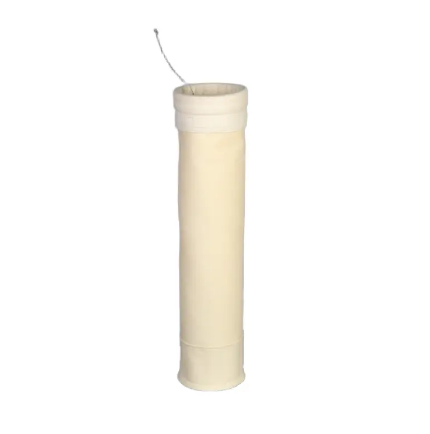
Over-cleaning wears out industrial fabrics rapidly. It also wastes vast amounts of costly compressed air. Conversely, under-cleaning causes rapid blinding. Blinding creates severe blockages and dangerously high pressure drops. Both extremes drive up your Total Cost of Ownership (TCO). Balancing these factors is crucial for operational success.
To fix this imbalance, implement a clean-on-demand strategy immediately. You should install Differential Pressure (DP) gauges. Link these gauges directly to your central control boards. Continuous manual timers force cleaning cycles regardless of actual need. This causes unnecessary fabric abrasion. DP gauges ensure cleaning only happens when filter resistance reaches a specific threshold. This dramatically extends bag life.
Next, optimize your pulse metrics carefully. You need practical baseline durations for your compressed air bursts. Common mistakes include setting the pulse duration too long. This wastes air without improving cleaning.
Set the pulse duration to a rapid 150-millisecond burst.
Allow the header tank to fully recover before initiating the next sequence.
Target a precise recovery pressure between 90 and 100 PSI.
Finally, apply staggered firing logic to your control board. Never use sequential firing for adjacent rows. Instead, implement a non-adjacent, staggered sequence. For example, program your system to fire rows 1, 4, 7, and then 10. Staggering prevents costly cross-contamination. If you fire adjacent rows, displaced dust gets immediately sucked into neighboring bags. This negates the entire cleaning cycle. A staggered approach ensures dust actually falls into the hopper.
Relying on a one-size-fits-all media selection drives up replacement costs. You must evaluate specific process characteristics before buying. Your selection must account for ambient moisture levels, dust abrasiveness, and combustibility. Choosing the correct micron rating ensures optimal performance for your specific particle size.
Many facilities manage both air and fluid streams simultaneously. You can find strong synergies between dry and wet filtration processes. Polyester felt acts as an economical powerhouse for dry dust up to 275°F. It offers excellent dimensional stability and resistance to most organic solvents. Similarly, Polyester Liquid Filter Bags provide the exact same durability for fluid processing lines. They resist chemical degradation perfectly. Standardizing high-quality polymer materials streamlines facility procurement. You can align inventory seamlessly across dry dust collectors and your Liquid Filter Bag housings. This cuts down on vendor management overhead.
Consider advanced media options for challenging industrial environments. Standard polyester fails when facing extreme conditions.
PTFE Membranes: Use these for sticky or hygroscopic dust applications. Moisture easily turns this particulate into mud. Mud permanently blinds standard fabrics. PTFE offers a non-stick surface, ensuring easy dust cake release.
Pleated Filters: Frame these as a capital-saving alternative. They prevent you from buying a much larger baghouse housing. Pleated designs increase the filtration surface area dramatically. They lower the air-to-cloth ratio within your existing equipment footprint. This allows higher production rates without buying new dust collectors.
Evaluating these options requires a structured approach. Use the following table to match media types with your operational reality.
| Media Type | Best Process Use Case | Primary Operational Benefit |
| Standard Polyester Felt | Dry, non-abrasive dust environments up to 275°F | Highly economical, durable, and readily available |
| PTFE Membrane | Sticky, moist, or highly hygroscopic dust particles | Prevents mud-like blinding and ensures clean release |
| Pleated Filters | High-capacity needs constrained by small factory footprints | Lowers air-to-cloth ratio efficiently without new equipment |
The highest-grade filtration media will still fail if bypass leaks occur. Leaks typically happen at the tubesheet or along poorly constructed seams. Poor installation ruins even the most expensive filter upgrades. Plant managers often blame the media when the real culprit is human error during installation.
You must follow strict physical orientation rules. These rules prevent premature wear and bypass emissions.
Bottom-loaded bags: Position the vertical seams exactly 180 degrees away from the cage gap. The cage gap creates localized high velocity. Seams placed near this gap will inevitably fray and tear.
Aisle facing: Offset all bag seams 45 degrees away from incoming walkways. This minimizes high-velocity abrasion from direct incoming air streams. It protects the weakest point of the filter.
Clamping: Tighten all hardware at a strict 90-degree angle to the seam. This ensures completely uniform pressure around the entire collar. Crooked clamps create micro-gaps for dust to escape.
Visual and diagnostic testing spots hidden issues early. Do not wait for a visible dust plume from your exhaust stack. We recommend routine fluorescent powder testing. First, introduce a specialized fluorescent compound into the dirty air intake. Then, inspect the clean air plenum using an ultraviolet auxiliary light.
This method highlights micro-tears and bypass leaks immediately. The powder glows brightly under the UV light, pinpointing the exact failure point. Fixing these small leaks promptly prevents major EPA or OSHA compliance violations down the road.
Interstitial velocity measures the upward speed of air in the spaces between filter bags. Managing this specific metric is scientifically crucial. If this upward velocity climbs too high, pulsed dust remains continuously suspended. It simply re-attaches to the bags instead of falling into the hopper below. This creates a perpetual cycle of poor cleaning and rising differential pressure.
You can combat high interstitial velocity using targeted pre-separation tactics. Heavy or highly abrasive particulate loads demand extra equipment protection. Woodworking, mining, and cement facilities benefit greatly from cyclone pre-separators. A cyclone uses centrifugal force to remove the bulk of heavy particulates. It catches them before they ever reach the main baghouse. This drastically extends your delicate filter lifespan and reduces the cleaning burden.
Hopper discipline also plays a major role in system efficiency. We must issue a strict warning regarding hopper usage. Hoppers exist strictly for funneling material out of the system. They do not exist for material storage.
Allowing dust to accumulate in the hopper creates massive risks. It leads to dust re-entrainment and poses a severe fire hazard. You must size your rotary valves or screw conveyors correctly. Proper sizing ensures dust evacuates continuously as it falls. It prevents material from backing up into the main housing and physically burying the bottom of the bags. Always keep the hopper empty during normal operations.
Facility buyers need clear methods to measure the success of their efficiency upgrades. You cannot manage what you do not accurately measure. Relying on visual inspections alone leaves too much room for error.
We strongly recommend relying on established industry benchmarking. This proves your Return on Investment (ROI) to upper management. ASHRAE Standard 199 serves as the authoritative lens for evaluating dust collector performance. It moves far beyond theoretical laboratory ratings. It tests industrial equipment under realistic, demanding operating conditions. Adopting this standard removes the guesswork from performance evaluations.
You should measure your post-upgrade success across four primary evaluation dimensions:
Particulate emissions: Track output levels during normal operation and during intense pulse-cleaning phases. Emissions often spike during cleaning.
Energy consumption efficiency: Monitor your compressed air usage carefully. Track the overall system electrical energy consumed by the main fans.
Cleaning cycle effectiveness: Observe how well your differential pressure recovers after a pulse sequence. A strong recovery indicates healthy filter media.
Hopper evacuation efficiency: Measure actual dust drop rates. Ensure no material remains permanently suspended in the housing due to high velocity.
Using the ASHRAE 199 framework provides a verifiable, objective baseline. It proves the financial and operational value of your recent system upgrades. It also helps justify future maintenance budgets.
Improving dust collector efficiency requires a highly systematic approach. You cannot rely on guesswork or piecemeal fixes. True optimization begins with correct seam alignment and intelligent pulse sequencing. It scales up to deploying targeted, advanced media like pleated filters or PTFE membranes. Every step builds upon the previous one to lower operational costs.
Start by calibrating your cleaning sequences and auditing your physical seam alignments.
Deploy targeted media solutions, utilizing pleated filters or PTFE membranes where necessary.
Keep interstitial velocity low and never use your hopper for storage.
Take action today by initiating a differential pressure audit for your system.
Consult a filtration engineer to map out a comprehensive media upgrade strategy for both air quality baghouses and liquid filtration lines.
A: The ideal ratio depends heavily on your specific dust type and particle size. Lighter, finer dust requires a significantly lower ratio. Heavier, granular particles allow for higher ratios. However, deviating from original manufacturer specifications often causes rapid fabric blinding. Always consult your equipment guidelines. Maintaining the correct ratio prevents interstitial velocity issues and ensures a long filter lifespan.
A: Blinded bags show consistently high differential pressure readings on your gauges. If the pressure drop remains high even after a full, aggressive cleaning cycle, the fabric pores are permanently blocked. Visual inspections will also reveal fine dust deeply embedded into the media fibers. This embedded dust cannot be removed by standard compressed air pulses, requiring immediate bag replacement.
A: Yes. You can drastically increase system capacity by switching to pleated filter bags. Pleated designs pack significantly more filtration surface area into the exact same physical dimensions. This effectively lowers the air-to-cloth ratio inside the unit. It allows your existing footprint to handle higher airflow volumes and heavier dust loads without investing in a completely new housing structure.
A: Yes, significant crossover exists between these two systems. Polyester serves as a highly efficient, durable base material for both applications. It works exceptionally well for dry felt bags operating under 275°F. It performs equally well in Polyester Liquid Filter Bags. These shared polymer materials resist aggressive chemicals and withstand intense industrial environments, streamlining your procurement process.


