Views: 0 Author: Site Editor Publish Time: 2026-03-25 Origin: Site
Unplanned downtime and bypassed contaminants remain the hidden costs of poor filtration maintenance. For facility managers, replacing a liquid filter bag shouldn't become a bottleneck. It must never pose a safety hazard. However, executing this changeout quickly requires precise skills. You need strict adherence to standard operating procedures (SOPs). Proper lockout/tagout (LOTO) protocols prevent dangerous industrial accidents. Accurate replacement part sourcing ensures you maintain a perfect seal. This guide breaks down the safest, most efficient replacement process available today. We evaluate total cost of ownership (TCO) drivers to optimize your maintenance budget. You will discover practical strategies to streamline plant operations safely. We also highlight how to avoid critical installation errors. These common errors easily compromise expensive downstream equipment. Follow these steps to maximize your filtration efficiency and protect your workforce.
Safety Precedes Speed: Mandatory depressurization, LOTO compliance, and proper personal protective equipment (PPE) mitigate risks from biohazards and pressurized blowouts.
Predictive Replacement: Relying on pressure differential (Delta P) rather than arbitrary timelines prevents premature wear and costly system strain.
Precision Installation: Proper seating of the bag ring and tightening lid bolts in an alternating pattern guarantees a leak-free seal.
Facility-Wide Sourcing: Standardizing filtration procurement—from liquid process filters to industrial dust collector filter bags—streamlines maintenance inventory and lowers TCO.
Many operators let liquid filters run until they fail. This practice is dangerous. Operating bags beyond their capacity forces the pump to work harder. Energy consumption spikes rapidly. You risk catastrophic filter rupture. A ruptured bag contaminates entire downstream product batches.
Monitor the pressure differential (Delta P) constantly. First, identify the baseline pressure of your clean system. Establish a hard rule for replacement. Base this threshold strictly on manufacturer specifications. Typically, you must replace the bag when Delta P rises sharply. Do not rely solely on visual inspection. Internal clogging often precedes exterior buildup.
Consider the impact on your Total Cost of Ownership (TCO). Evaluate the ultimate trade-off. The cost of a new filter bag remains negligible. Compare it directly to the cost of ruined product. Compare it to damaged downstream pumps. Reverse osmosis (RO) membranes are incredibly expensive to replace.
| Maintenance Strategy | Pump Energy Usage | Rupture Risk | TCO Impact |
|---|---|---|---|
| Run-to-Failure | Extremely High | Severe | Highly Expensive |
| Delta-P Predictive | Optimized | Minimal | Cost-Effective |
Proper preparation prevents catastrophic accidents. Begin by implementing LOTO and system isolation procedures.
Always cut power to pumps.
Disconnect float switches immediately.
Close all upstream and downstream isolation valves.
Do you have dual or skid-mounted multi-bag systems? Isolate only the specific housing you are servicing. This targeted isolation avoids total process interruption.
Manage depressurization and fluid carefully. Open vent valves completely before attempting to loosen any lid bolts. Trapped high pressure remains a severe safety hazard. It causes dangerous blowouts. Next, open the drain valve. Route the fluid into a proper containment vessel. Use waterproof containers to prevent environmental contamination. This action also eliminates dangerous slip hazards.
Always prioritize PPE and hazard awareness. Wear cut-resistant and chemical-resistant gloves. Use appropriate safety goggles. Assume stagnant tank water contains dangerous biological hazards. It might also hold highly abrasive particulates. Garnet in machining applications acts like sandpaper. Protect your skin and eyes at all times.
Execute these steps methodically. Do not rush the process.
Step 1: Open the Housing Safely. Loosen the eye bolts carefully. Release the retaining clamps. Turn the hand-wheel or lift the lid. Ensure the lifting mechanism is fully secured. Never reach inside until you confirm it is locked.
Step 2: Extract and Dewater the Old Bag. Remove the filter bag hold-down device or clamp. Lift the bag slightly. Gently tap it against the basket to dewater the fabric. Saturated bags contain heavy abrasive waste. They can easily cause muscle strain if you lift them too quickly. Dispose of the used bag properly. Follow all facility compliance and environmental regulations.
Step 3: Inspect the Housing and Restrainer Basket. Never skip inspecting the inner housing. Check the metal or FRP (Fiberglass Reinforced Plastic) surfaces. Clean out all residual sludge. Verify the restrainer basket is perfectly round. Ensure it is completely free of sharp deformations. Sharp edges will puncture a new bag immediately.
Step 4: Install the New Filter Bag. Insert the new bag directly into the restrainer basket. Ensure the top ring snaps perfectly into place. It must sit flush within the housing's machined groove. The ring might be plastic or steel. An unseated ring guarantees liquid bypass.
Step 5: Reseal and Re-pressurize. Lower the lid carefully. Reinstall the hold-down clamp. Pay attention to this crucial engineering detail: tighten the eye bolts in an alternating or opposite star pattern. This ensures even pressure across the O-ring or gasket. Close the drain valve securely. Slowly crack open the upstream valve. Allow liquid to enter gradually. This pushes trapped air out through the vent valve. Close the vent once liquid spills out. Finally, fully open the upstream and downstream valves.
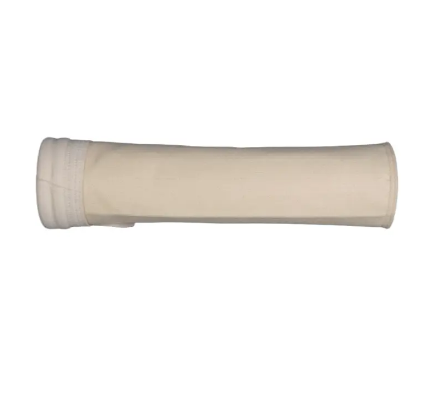
Evaluate material and micron compatibility strictly. Ensure exact matching of filter materials. Common options include Polyester, Polypropylene, Nylon, and PTFE. Match these to the liquid’s chemical makeup and temperature. Verify your required micron rating. Ratings often range from 200 down to 0.5 microns. Check sizing standards closely. Standard Size #2 bags ensure seamless housing compatibility.
Material Compatibility Guide Filter Material Best Application Temperature Limit Polypropylene Broad chemical resistance ~200°F (93°C) Polyester High temp, non-alkaline fluids ~300°F (149°C) Nylon Abrasive particulates ~250°F (121°C) PTFE Extreme corrosive liquids ~500°F (260°C)
Consolidate your facility filtration needs smartly. Many heavy industrial facilities operate liquid filtration alongside air quality systems. Procurement teams evaluating liquid bags should simultaneously audit their industrial dust collector filter bags. Centralizing your purchasing lowers overhead.
Liquid systems manage fluid viscosity and corrosive environments. They often utilize FRP housings for high-salt liquids. Meanwhile, a bag filter for dust collector systems manages dry, high-velocity particulate flow. They handle different mediums but demand similar structural precision.
Sourcing both liquid elements and Dust Collector Filter Bags from reliable suppliers makes sense. Look for partners capable of stringent manufacturing tolerances. This approach streamlines your supply chains. It guarantees consistent structural integrity across all plant operations.
Avoid these critical errors during your next changeout to protect your equipment.
Skipping the Leak Test: Failing to monitor the housing is a massive mistake. Watch it closely for the first 5 minutes after re-pressurization. Neglecting this step leads to undetected, slow chemical leaks.
Improper O-Ring Maintenance: Never reuse pinched or flattened O-rings. Dry O-rings compromise the entire seal. Always inspect them during a bag changeout. Lightly lubricate O-rings before you close the lid.
Reversed Flange Connections: Avoid this during initial installation or major overhauls. Installing inlet and outlet flanges backward is disastrous. It will instantly collapse the bag. This causes irreversible system failure.
Replacing a liquid filter bag quickly requires strict procedural discipline. It is never about rushing. Adhere to a standardized SOP every single time. Prioritize depressurization, safe extraction, and precise seating. Facilities can then eliminate bypass risks completely. You will protect sensitive downstream equipment effectively. Take this opportunity to review your current filtration performance. Audit your replacement inventory across both liquid and air systems. Finally, establish a predictive, Delta-P-driven maintenance schedule.
A: Replacement frequency depends heavily on fluid viscosity, particulate load, and continuous operating hours. You should avoid relying on a basic calendar schedule. Instead, replace the filter bag only when the system hits the manufacturer-specified pressure differential (Delta P) threshold. This guarantees maximum efficiency.
A: Yes. If your system is skid-mounted utilizing dual parallel housings and isolation valves, you can maintain continuous operation. You simply take one chamber offline. Drain and service it safely while diverting the process flow entirely to the active chamber.
A: Always allow the bag to dewater first. Suspend it temporarily over the basket and tap it lightly. Use mechanical lifting aids if the particulate exceeds safe manual lifting limits. Metal shavings or machining abrasives get incredibly heavy. Transfer the bag directly into waterproof transport containers.


