Views: 0 Author: Site Editor Publish Time: 2026-03-11 Origin: Site
Selecting a liquid filter bag represents a critical operational decision. You should never treat it as a cheap commodity purchase. Incorrect specifications lead directly to fluid bypass, severe equipment damage, and escalating downtime costs. Why do industrial filters fail so often? Industry data reveals 95% of bag failures stem from engineering mismatches. Plant operators frequently choose the wrong viscosity limits, incompatible housings, or incorrect micron ratings. They rarely face actual manufacturing defects. You need a data-driven approach to correct these operational blind spots.
We designed this guide as a definitive, engineering-led framework. Procurement specialists and plant managers can use it to evaluate, shortlist, and optimize industrial filtration systems based on Total Cost of Ownership (TCO). Let us dive into the exact mechanics you need. We will cover fluid dynamics, media physics, and housing architecture. You will gain actionable insights to prevent costly system failures and protect your valuable downstream equipment.
TCO Over Unit Price: The true cost of a filter bag includes pump energy load, maintenance downtime, and lost product volume, far outweighing the initial purchase price.
Bypass Prevention is Critical: Opting for fully welded seams and precision-engineered plastic flanges eliminates needle-hole bypass, ensuring absolute particle retention.
Match Physics to the Contaminant: Understand the mechanical difference between depth filtration (needlefelts for gels/varied particles) and surface filtration (monofilament mesh for hard particles).
Track Pressure Differentials: Standardizing filter change-outs at a strict 15 PSID threshold prevents bag rupture and downstream system contamination.
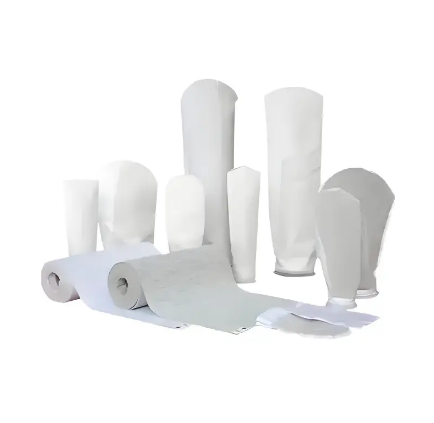
Define the exact success criteria for the filtration stage before buying anything. Are you protecting downstream pumps from abrasive wear? Do you need final product clarity for a sensitive beverage line? Perhaps you must meet strict environmental compliance standards for wastewater discharge. You must clarify this primary goal immediately. It dictates every subsequent engineering choice across your facility.
You must choose between nominal and absolute micron ratings. This core decision heavily impacts your maintenance budget and product quality.
Nominal: These bags offer cost-effective bulk pre-filtration. They capture roughly 60% to 80% of targeted particles. Use them where exact retention isn't mission-critical.
Absolute: These cost significantly more but guarantee >99% retention at the specified micron level. Use them for final liquid polishing or strict pharmaceutical quality control.
Physical fluid constraints strictly dictate your bag size and material. High-viscosity fluids demand much larger filtration surface areas. If you force thick resins through a small bag, you cause rapid pressure spikes. Premature blinding happens almost instantly. You must perfectly match the anticipated flow rate to the media's natural permeability to avoid stalling your production lines.
Establish baseline operational conditions early in your sourcing process. Temperature limits completely determine your fiber material choices. Operating pressure dictates the required housing strength. We must emphasize differential pressure (ΔP) monitoring here. Tracking your ΔP remains non-negotiable. Standardize your operations by treating 15 PSID as the critical replacement threshold. Exceeding this limit severely risks catastrophic bag rupture.
You must understand exactly how different materials trap microscopic particles.
Needlefelts (Depth): This material creates a dense 3D labyrinth. It captures varied particle sizes throughout its entire physical thickness. Choose needlefelt for high dirt-holding capacity. It handles gel-like contaminants perfectly.
Woven Monofilament (Surface): This fabric acts as a flat 2D screen. It provides a sharp, exact cut-off point. Use it for precise classification and high flow rates. Hard particles bounce off or become trapped instantly on the top layer.
Meltblown Media: This offers a high-efficiency micro-fiber structure. It provides absolute 1µm interception. Use meltblown media for critical food-grade polishing or chemical purity requirements.
Guide your shortlisting logic based on fluid pH and operating temperature. Use the reference table below for baseline material selection.
| Material | Max Operating Temp | Chemical Resistance Profile | Best Industrial Application |
|---|---|---|---|
| Polypropylene (PP) | 200°F (93°C) | Excellent broad chemical resistance | General water, strong acids, alkalis |
| Polyester (PE) | 275°F (135°C) | Good solvent resistance, poor strong alkalis | High-temp oils, petrochemicals |
| Nylon (NMO) | 300°F (148°C) | Excellent solvent and alkali resistance | Paints, heavy industrial solvents |
| Fluoropolymer (PTFE) | 500°F (260°C) | Extreme total chemical resistance | Highly aggressive acids, aerospace fluids |
Address cross-functional procurement needs across your entire plant. Liquid processing heavily relies on Polypropylene, Polyester, and Nylon. However, facilities running concurrent dry bulk or airborne particulate operations must aggressively align their air-side sourcing. For airborne environmental compliance, you must understand the distinct engineering required for Dust Collector Filter Bags. These gas-phase systems face entirely different thermal and chemical stresses. You should evaluate high-temperature and chemically resistant media. Good examples include Aramid Fiber Filter Bags and PPS Filter Bags Dust for pulse-jet and shaker systems. Matching both liquid and air filtration strategies dramatically reduces overall vendor complexity.
Contrast traditional sewn seams versus modern welded seams. Sewn seams inherently create thousands of tiny needle holes. Liquid naturally follows the path of least resistance. It flows right through these tiny punctures. This causes unacceptable bypass leakage. We strongly advocate for fully welded seams in critical applications. Ultrasonic welding directly melts the fabric edges together. It completely eliminates needle-hole bypass and prevents thread degradation.
The top ring seals the filter inside the pressure vessel. Your choice here determines overall system integrity.
Galvanized/Stainless Steel Rings: These remain highly durable. However, they rely entirely on housing lid compression to form a seal. They can sometimes allow bypass leakage if operators install them improperly.
Plastic Flanges Built-In Handles: These offer vastly superior performance. The plastic expands slightly under fluid pressure to form a positive, watertight seal. They prevent debris buildup on the bag head. Furthermore, the built-in handles drastically improve ergonomic extraction for your maintenance operators.
Your chosen bag only performs as well as its surrounding housing. Top-inlet designs use the heavy lid to compress the top seal directly. This eliminates bypass almost entirely and suits high-efficiency applications perfectly. Side-inlet designs cost less upfront but require internal metal restrainer baskets and hold-down springs to function safely.
Mention specialized requirements during your system audits. You might need Duplex housings for continuous 24/7 operations. These dual-chamber units let you swap dirty bags without halting production flow. Consider PVDF or Hastelloy construction for highly corrosive acids where standard stainless steel quickly corrodes and fails.
Provide your finance team a solid framework to calculate true ROI. Cheaper filter media often results in accelerated pore blinding. This inevitably increases your labor costs and forces frequent production halts. Look at the true financial picture.
| Cost Component | Cheap Commodity Bag | Engineered Welded Bag |
|---|---|---|
| Initial Purchase Price | $3.00 | $8.00 |
| Change-out Frequency | Every 2 days | Every 7 days |
| Labor Downtime Cost | Extremely High | Low |
| Bypass Risk & Rework | High (Due to Sewn Seams) | Zero (Welded Flange) |
| Total Monthly TCO | $450+ (Hidden Costs) | $180 (Optimized) |
Detail how a sudden bag collapse impacts downstream equipment. Incorrect specifications cause catastrophic blowouts. A ruptured bag instantly dumps concentrated sludge downstream. This leads directly to severe nozzle plugging and accelerated pump wear. Quality-first filtration strategies typically yield a 20% reduction in overall facility maintenance budgets. Do not step over dollars to save pennies on filters.
Explain how operating blinded filters forces transfer pumps to work significantly harder. As particles plug the media pores, differential pressure spikes sharply. Your system must consume more electricity simply to push liquid through the obstruction. This subtly inflates facility energy expenditure over time. Changing bags precisely at 15 PSID keeps your energy load flat, predictable, and fully optimized.
Introduce this expert-level hardware to your team. Standard Size 2 filter bags hold significant fluid volume. Inserting a hollow displacement balloon into a standard Size 2 bag reduces idle fluid volume from 4.2 gallons to just 1.9 gallons. This drastically reduces the loss of high-value fluids during change-outs. If your facility filters expensive paints, coatings, or heavy resins, this simple hardware pays for itself within days.
Recommend utilizing heavy-duty magnetic assemblies inside the filter basket. These magnets actively trap ferromagnetic particles before they ever touch the fabric. Sharp metal shavings will slice right through delicate filter media. Catching them early extends bag life exponentially and prevents sudden blowouts.
Advocate strongly for a multi-stage approach. Never use one expensive bag to do all the heavy lifting. Install a cheap, high-micron nominal bag upstream. It catches the heavy bulk sludge. Then, place an expensive, absolute-rated meltblown bag downstream. The upstream bag perfectly protects the absolute filter. This staged strategy can exponentially extend your overall media lifespan and lower your annual TCO.
Liquid filtration operates as an interconnected, highly engineered ecosystem. It requires exact matching of fluid dynamics, media physics, and housing architecture. You cannot afford to guess. Upgrading to fully welded seams, matching media to viscosity, and respecting pressure limits will completely transform your operational efficiency.
Compile these critical data points before requesting any vendor quote:
Fluid Type: Exact chemical composition and required pH limits.
Operating Temp & Pressure: Normal operating baseline and peak maximums.
Target Micron Retention: Clarify absolute or nominal requirements.
Viscosity: Measured precisely in Centipoise (cP) at normal operating temperature.
Flow Rate: Documented in Gallons per minute (GPM).
Consult qualified application engineers today. Audit your current Total Cost of Ownership thoroughly. Request a custom chemical compatibility assessment to stop fluid bypass permanently and protect your entire facility.
A: Nominal ratings represent an average capture efficiency, typically retaining 60% to 80% of targeted particles. They offer excellent economic value for bulk pre-filtration. Absolute ratings guarantee over 99% capture efficiency at the specified micron size. You pay more for absolute bags, but they provide critical technical reliability for final polishing.
A: Filter bags collapse due to extreme structural stress. High differential pressure pushes the fabric beyond its limits. Excessive fluid viscosity often causes rapid media blinding. Furthermore, operating a system without a proper metal restrainer basket removes crucial physical support. Always monitor your gauges and ensure your basket fits tightly.
A: You should replace them based strictly on system data, not a calendar schedule. Standardize your change-outs when the system reaches a 15 PSID threshold. Waiting longer severely risks catastrophic bag rupture. Replacing them earlier wastes perfectly good filter life and unnecessarily increases your operational expenses.
A: Heavy monofilament mesh bags can sometimes be washed and reused for coarse applications. However, needlefelt and meltblown bags are strictly single-use products. Cleaning them destroys their complex internal fiber matrix. Reusing them guarantees bypass leakage and compromises your entire retention integrity. Always replace depth-style media completely.


