Views: 0 Author: Site Editor Publish Time: 2026-02-25 Origin: Site
Production lines rarely operate under perfectly stable conditions. Airflow fluctuates, raw materials vary, temperatures shift, and dust characteristics change over time. These variations directly affect filtration performance, yet many systems still rely on standard filter components that were not designed for real process complexity. This gap explains why facilities experience premature failures, unstable emissions, or rising energy costs. The real solution lies in engineering Dust Collector Filter Bags around the operating environment rather than forcing the environment to adapt to generic filtration products.
Custom dust collector filter bags transform filtration from a consumable expense into a performance tool. By aligning media structure, construction design, and system integration with actual process requirements, industrial operators can achieve stable pressure drop, predictable maintenance cycles, and longer equipment life. Suzhou Yuansheng Environmental Technology Co., Ltd. develops advanced filtration solutions that integrate materials science, manufacturing precision, and system understanding to deliver long-term reliability for industrial dust collection.
Customization begins with physical compatibility, but it does not end there. Precise dimensional matching ensures that airflow distribution remains uniform and sealing integrity is maintained. A filter bag that is slightly oversized, undersized, or incorrectly configured can create bypass leakage, uneven pulsing, and accelerated wear.
System compatibility is equally important. Pulse jet collectors generate frequent mechanical stress that requires strong fabric construction and effective surface release. Shaker collectors rely on flexibility and fatigue resistance, while reverse air systems demand dimensional stability. Selecting a filter bag without considering the cleaning mechanism often leads to unstable pressure profiles and inconsistent performance.
Performance targets must also be defined clearly. Some facilities prioritize maximum capture efficiency to meet strict environmental standards, while others focus on reducing fan energy consumption. In many cases, the goal is to balance low resistance, strong capture, and consistent cleanability. True customization means translating performance goals into material structure and construction details that support long-term operation.
Dust properties are the foundation of filter bag engineering. Particle size distribution determines whether filtration relies on surface cake formation or deeper particle penetration. Fine dust often requires structures that prevent blinding while maintaining airflow, whereas coarse dust may demand abrasion-resistant designs.
Dust stickiness plays a major role in cleanability. Hygroscopic or oily particles can cause rapid pressure increase if the filter media does not support effective release. In such cases, engineered surface finishes help maintain consistent cleaning cycles and prevent deep clogging.
Abrasion is another critical factor. High velocity inlet zones expose filter bags to intense mechanical stress. Without reinforcement or abrasion-resistant materials, these areas become failure points. Hopper re-entrainment can also create localized wear that standard designs may not withstand. Understanding how dust behaves inside the collector allows customized filter bags to address these stress points proactively.
Industrial filtration environments frequently involve elevated temperatures and chemical exposure. Media selection must consider both continuous operating temperature and peak conditions. Thermal stability ensures that filter bags maintain their dimensions and structural integrity over extended operating periods.
Chemical exposure introduces long-term degradation risks. Acid gases, alkaline dust, and solvent vapors can weaken fibers and seams if compatibility is not considered during design. Selecting media that resist chemical attack prevents gradual performance decline and unexpected failures.
Surface engineering further enhances durability. Specialized finishes can limit particle penetration, improve dust release, and protect fibers from chemical interaction. These design features support stable pressure drop and reduce maintenance frequency, making them essential elements of custom filter bag solutions.
Pressure drop is one of the most important indicators of filtration performance. As differential pressure increases, fan energy consumption rises and airflow decreases. Systems that operate outside their optimal pressure range often experience higher operating costs and reduced productivity.
Filter bags designed with balanced permeability allow airflow to pass while supporting efficient dust cake formation. When dust cake releases easily during pulsing, pressure remains stable and cleaning frequency can be reduced. This not only lowers energy consumption but also decreases mechanical stress on the filter bags.
Advanced three dimensional media structures play a key role in achieving this balance. By combining strong particle interception with low airflow resistance, these designs support both environmental compliance and cost efficiency. Facilities benefit from predictable performance rather than reactive maintenance.
Fabric selection alone does not determine service life. Construction techniques influence how filter bags perform under real operating stress. Seam strength, reinforcement placement, and mechanical finishing all contribute to durability.
Reinforced openings help prevent tearing caused by pulsing forces, while abrasion protection extends life in high velocity areas. Consistent manufacturing quality ensures that each filter bag performs as expected across large installations.
Filter cage compatibility is another essential factor. Even well-designed media can fail prematurely if cages contain rough surfaces, misalignment, or structural defects. Proper dimensional matching and smooth cage surfaces protect filter bags from mechanical wear.
Sealing design directly affects filtration efficiency. Reliable sealing prevents dust bypass and ensures that captured particles remain within the system. Precision snap band design and consistent sealing pressure help maintain long-term performance stability.
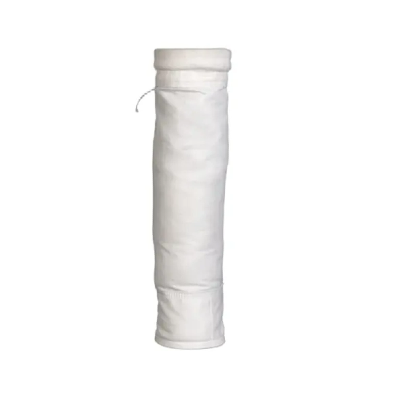
Developing an effective filter bag specification requires structured evaluation of process conditions. Industrial facilities benefit from translating operating data into design parameters that guide media selection and construction.
Specification Parameter | Typical Inputs | Performance Impact |
Dust characteristics | Particle size, abrasiveness, moisture | Influences media structure and reinforcement |
Temperature range | Continuous and peak conditions | Determines thermal stability requirements |
Chemical exposure | Acid, alkali, solvent presence | Guides material compatibility decisions |
Cleaning technology | Pulse jet, shaker, reverse air | Defines mechanical and surface performance needs |
Pressure targets | Desired differential pressure range | Affects energy consumption and cleaning frequency |
Dimensional requirements | Bag size and sealing design | Ensures airflow uniformity and prevents leakage |
A structured specification process allows facilities to move beyond generic product selection toward engineered filtration solutions.
Many dust collection systems face performance limitations because filtration area no longer matches production demand. Increasing filtration capacity often provides the most efficient path to improvement.
Expanding effective filter area improves airflow distribution, lowers differential pressure, and extends cleaning intervals. In practice, optimized filter bag design can significantly increase available filtration area without requiring collector replacement.
This approach offers immediate operational benefits. Reduced pressure drop lowers fan energy consumption, while longer cleaning intervals decrease mechanical wear. Facilities also gain greater stability during production fluctuations.
Flexible upgrade strategies support future growth. As production increases or raw materials change, filtration requirements evolve. Designing filter bags with scalability in mind allows systems to adapt without major capital investment.
Even the best filter bag design requires proper installation and operation. Handling procedures should prevent contamination and mechanical damage during changeout. Correct seating ensures sealing integrity and uniform airflow.
Startup procedures help establish baseline performance. Monitoring differential pressure during early operation allows operators to detect irregularities before they escalate. Routine inspection supports proactive maintenance rather than reactive replacement.
Operational parameters such as pulsing frequency, compressed air quality, and temperature control influence filter bag life. Aligning operational practices with filter bag design maximizes the benefits of customization.
Engineered filter bags contribute to multiple operational improvements. Stable pressure drop supports consistent airflow, which improves production stability. Reliable capture efficiency helps facilities meet emission requirements with confidence.
Reduced maintenance frequency lowers labor demand and minimizes unplanned downtime. Longer service life decreases replacement costs and simplifies inventory management. These benefits accumulate over time, transforming filtration into a predictable operating parameter.
Advanced manufacturing also plays an important role. Precision production equipment and strict quality standards ensure consistent performance across installations. This consistency allows industrial operators to scale solutions across multiple facilities.
Sustainability goals increasingly influence industrial filtration strategies. Energy consumption, waste generation, and resource efficiency are all linked to filtration performance. Filter bags that maintain low resistance contribute directly to reduced energy use.
Extended service life reduces material waste and replacement frequency. Improved capture efficiency supports cleaner emissions and regulatory compliance. These factors position engineered filter bags as an essential component of sustainable industrial operation.
Integrated filtration solutions also support digital monitoring and predictive maintenance strategies. Stable performance allows facilities to use pressure data as a reliable indicator for maintenance planning. This transition from reactive maintenance to predictive management represents a significant operational advantage.
Industrial dust collection performance depends on how effectively filtration components reflect real operating conditions. Custom engineering aligns dust behavior, temperature, chemistry, cleaning method, pressure targets, and construction details into a cohesive solution. When these variables are integrated, filtration systems deliver predictable performance, lower operating cost, and extended service life. Facilities seeking stable and efficient dust control benefit from working with advanced solution providers that understand both materials and system design. Well engineered baghouse filter bags transform filtration from a recurring challenge into a controlled and optimized process.
Contact us to share your process conditions and explore a tailored filtration solution designed to enhance reliability, reduce energy consumption, and support long-term industrial performance.
How do custom Dust Collector Filter Bags improve industrial performance
Custom designs align media structure with dust characteristics and system conditions, resulting in stable pressure drop, improved cleanability, and longer service life.
When should a facility consider upgrading filter bags
Upgrades are recommended when pressure drop increases consistently, maintenance frequency rises, or production demand exceeds existing filtration capacity.
Can customized filter bags reduce energy consumption
Yes. Filter bags designed for low resistance maintain stable airflow, which lowers fan energy usage and overall operating cost.
What information helps define an engineered filter bag solution
Key inputs include dust properties, operating temperature, chemical exposure, collector design, cleaning method, dimensional requirements, and performance targets.


